8-K
0001572616false00015726162026-07-152026-07-15
UNITED STATES
SECURITIES AND EXCHANGE COMMISSION
WASHINGTON, D.C. 20549
FORM 8-K
CURRENT REPORT
Pursuant to Section 13 or 15(d) of the Securities Exchange Act of 1934
|
Date of Report (Date of earliest event reported): July 15, 2026 |
Fractyl Health, Inc.
(Exact name of Registrant as Specified in Its Charter)
|
|
|
|
|
Delaware |
001-41942 |
27-3553477 |
(State or Other Jurisdiction
of Incorporation) |
(Commission File Number) |
(IRS Employer
Identification No.) |
|
|
|
|
|
3 Van de Graaff Drive Suite 200 |
|
Burlington, Massachusetts |
|
01803 |
(Address of Principal Executive Offices) |
|
(Zip Code) |
|
Registrant’s Telephone Number, Including Area Code: (781) 902-8800 |
(Former Name or Former Address, if Changed Since Last Report)
Check the appropriate box below if the Form 8-K filing is intended to simultaneously satisfy the filing obligation of the registrant under any of the following provisions:
☐Written communications pursuant to Rule 425 under the Securities Act (17 CFR 230.425)
☐Soliciting material pursuant to Rule 14a-12 under the Exchange Act (17 CFR 240.14a-12)
☐Pre-commencement communications pursuant to Rule 14d-2(b) under the Exchange Act (17 CFR 240.14d-2(b))
☐Pre-commencement communications pursuant to Rule 13e-4(c) under the Exchange Act (17 CFR 240.13e-4(c))
Securities registered pursuant to Section 12(b) of the Act:
|
|
|
|
|
Title of each class
|
|
Trading
Symbol(s) |
|
Name of each exchange on which registered
|
Common Stock, $0.00001 par value per share |
|
GUTS |
|
The Nasdaq Global Market |
Indicate by check mark whether the registrant is an emerging growth company as defined in Rule 405 of the Securities Act of 1933 (§ 230.405 of this chapter) or Rule 12b-2 of the Securities Exchange Act of 1934 (§ 240.12b-2 of this chapter).
Emerging growth company ☒
If an emerging growth company, indicate by check mark if the registrant has elected not to use the extended transition period for complying with any new or revised financial accounting standards provided pursuant to Section 13(a) of the Exchange Act. ☐
Item 7.01 Regulation FD Disclosure.
On July 15, 2026 Fractyl Health, Inc. (the “Company” or “Fractyl”) issued a press release announcing one-year results from its REMAIN-1 Midpoint Cohort, a distinct patient cohort assessing the potential of the Revita DMR System (“Revita”) to maintain weight loss after GLP-1 discontinuation. A copy of the press release is furnished as Exhibit 99.1 to this Current Report on Form 8-K and is incorporated herein by reference.
As described in the accompanying press release, the Company will host a conference call and live audio webcast today, July 15, 2026 at 8:00 a.m., Eastern Time, to discuss the presentation of data described above.
The live audio webcast may be accessed through the “Events” section of the Company’s website at ir.fractyl.com. A copy of the presentation to be used by the Company during the conference call is furnished as Exhibit 99.2 to this Current Report on Form 8-K and is incorporated herein by reference.
The information contained in Item 7.01 of this Current Report on Form 8-K, including Exhibits 99.1 and 99.2 attached hereto, shall not be deemed “filed” for purposes of Section 18 of the Securities Exchange Act of 1934, as amended (the “Exchange Act”), or otherwise subject to the liabilities of that section, and shall not be deemed incorporated by reference into any of the Company’s filings under the Securities Act of 1933, as amended, or the Exchange Act, whether made before or after the date hereof, regardless of any general incorporation language in such filing, except as shall be expressly set forth by specific reference in such filing.
The Company’s website and any information contained on the Company’s website are not incorporated into this Current Report on Form 8-K.
Item 8.01 Other Events.
On July 15, 2026, the Company reported one-year data from its REMAIN-1 Midpoint Cohort, a blinded, sham-controlled study evaluating Revita for weight maintenance following GLP-1 drug discontinuation.
Key One-Year Findings
•Dose-dependent durability confirmed at one year: In the full modified intention-to-treat (mITT) population (N=45), a single Revita procedure reduced weight regain by approximately 40% versus sham at one year (least-squares mean weight regain of 7.8% versus 13.0% of body weight; n=29 versus 16 for Revita versus sham). Participants who received complete duodenal ablation (>14 cm) maintained approximately 81% of GLP-1-induced weight loss at one year, compared with 48% in sham participants (least-squares mean weight regain of 4.8% versus 13.0% of body weight; n=17 versus 16 for Revita versus sham), reflecting a reduction in weight regain of over 60% versus sham. This is consistent with earlier findings that more complete duodenal ablation drives greater treatment effect.
•Greatest benefit in patients with greatest need: In an optimized population of participants who received complete duodenal ablation (>14 cm) and had higher GLP-1 run-in weight loss (≥17.5%), Revita maintained approximately 84% of GLP-1-induced weight loss at one year versus 46% with sham (least-squares mean weight regain of 4.1% versus 13.5% of body weight; n=10 versus 8 for Revita versus sham). These results are consistent with the view that patients at greatest need may derive the greatest benefit from Revita due to their higher propensity for weight regain after GLP-1 discontinuation.
•Weight-maintenance responder rate: The second co-primary endpoint of the Pivotal Cohort, assessed against a U.S. Food and Drug Administration (FDA) mandated pre-specified performance goal of >50%, measures the proportion of Revita patients maintaining at least 5% total body weight loss relative to their pre-tirzepatide weight at one year. As a reference point for the Pivotal Cohort, this responder rate was 73% in the Midpoint Cohort mITT population, rising to 91% in those with complete duodenal ablation (>14 cm).
•Excellent tolerability: No device- or procedure-related serious adverse events occurred. No new device-related treatment-emergent adverse events (TEAEs) were observed between six and 12 months. Overall TEAE rates were comparable between arms through one year (24% Revita versus 25% sham), reflecting a generally mild peri-procedural adverse event profile that supports potentially broad outpatient use for Revita. One new diagnosis of type 2 diabetes occurred in the sham arm versus none with Revita.
Cautionary Regarding Forward-Looking Statements
This Current Report on Form 8-K contains forward-looking statements within the meaning of the Private Securities Litigation Reform Act of 1995. All statements contained in this Current Report on Form 8-K that do not relate to matters of historical fact are forward-looking statements. These statements may be identified by words such as “aims,” “anticipates,” “believes,” “could,” “estimates,” “expects,” “forecasts,” “goal,” “intends,” “may,” “plans,” “possible,” “potential,” “seeks,” “will” and variations of these words or similar expressions that are intended to identify forward-looking statements, although not all forward-looking statements contain these words. Forward-looking statements in this Current Report on Form 8-K include, without limitation, statements regarding: the promise and potential impact of our clinical trial data and product candidates, including Revita’s potential for maintaining weight loss after GLP-1 based therapy discontinuation and stabilizing cardiometabolic parameters; the translatability of results and scalability of technique related to Revita; the design, initiation, timing and results of clinical enrollment and any clinical studies or readouts, including readouts from the REMAIN-1 Midpoint Cohort and the REMAIN-1 Pivotal Cohort; the potential launch or commercialization of any of our product candidates or products; our regulatory strategy, including potential use and benefits of the De Novo pathway (FDA pre-submission feedback is advisory and non-binding, and there is no assurance that FDA will accept a De Novo marketing application submission or that Revita will receive marketing authorization); the potential treatment population or benefits for any of our product candidates or products; our strategic and product development objectives and goals; and the timing of any of the foregoing. These statements are neither promises nor guarantees, but involve known and unknown risks, uncertainties and other important factors that may cause our actual results, performance or achievements to be materially different from any future results, performance or achievements expressed or implied by the forward-looking statements, including, but not limited to, the risks that are discussed more fully in our filings with the Securities and Exchange Commission (the “SEC”), including the “Risk Factors” section of our Annual Report on Form 10-K for the year ended December 31, 2025, filed with the SEC on March 24, 2026, and other documents we subsequently file with or furnish to the SEC, including our Quarterly Report on Form 10-Q for the quarter ended March 31, 2026, filed with the SEC on May 12, 2026. These forward-looking statements are based on management’s current estimates and expectations. While we may elect to update such forward-looking statements at some point in the future, we disclaim any obligation to do so, even if subsequent events cause our views to change.
Item 9.01 Financial Statements and Exhibits.
SIGNATURES
Pursuant to the requirements of the Securities Exchange Act of 1934, the registrant has duly caused this report to be signed on its behalf by the undersigned hereunto duly authorized.
|
|
|
|
|
|
|
Fractyl Health, Inc. |
|
|
|
|
Date: |
July 15, 2026 |
By: |
/s/ Harith Rajagopalan |
|
|
|
Harith Rajagopalan, M.D., Ph.D.,
Co-Founder, Chief Executive Officer and Director
(Principal Executive Officer) |
EX-99.1
Fractyl Health Reports Positive Randomized Data from REMAIN-1 Midpoint Cohort Demonstrating Durable Weight Maintenance One Year After GLP-1 Discontinuation
Up to 84% of GLP-1 induced weight loss retained with Revita® versus 46% with sham at one year in patients receiving complete duodenal ablations
Next anticipated Revita® milestones are topline six-month randomized data from the REMAIN-1 Pivotal Cohort in early Q4 2026 and a potential FDA De Novo marketing application submission in late Q4 2026
Company to host investor webcast today at 8:00 a.m. ET
BURLINGTON, Mass., July 15, 2026 (GLOBE NEWSWIRE) — Fractyl Health, Inc. (Nasdaq: GUTS) (the Company or Fractyl), a clinical-stage metabolic therapeutics company focused on pioneering novel approaches to treat obesity and type 2 diabetes (T2D), today announced positive one-year results from its REMAIN-1 Midpoint Cohort (“Midpoint Cohort”). The new results reinforce the potential of the Revita DMR System (Revita) to be the first durable procedural therapy for post-GLP-1 weight maintenance.
Key Findings:
•Dose-dependent durability confirmed at one year: In the full modified intention-to-treat (mITT) population (N=45), a single Revita procedure reduced weight regain by approximately 40% versus sham at one year (least-squares mean weight regain of 7.8% versus 13.0% of body weight; n=29 versus 16 for Revita versus sham). Participants who received complete duodenal ablation (>14 cm) maintained approximately 81% of GLP-1-induced weight loss at one year, compared with 48% in sham participants (least-squares mean weight regain of 4.8% versus 13.0% of body weight; n=17 versus 16 for Revita versus sham), reflecting a reduction in weight regain of over 60% versus sham. This is consistent with earlier findings that more complete duodenal ablation drives greater treatment effect.
•Greatest benefit in patients with greatest need: In an optimized population of participants who received complete duodenal ablation (>14 cm) and had higher GLP-1 run-in weight loss (≥17.5%), Revita maintained approximately 84% of GLP-1-induced weight loss at one year versus 46% with sham (least-squares mean weight regain of 4.1% versus 13.5% of body weight; n=10 versus 8 for Revita versus sham). These results are consistent with the view that patients at greatest need may derive the greatest benefit from Revita due to their higher propensity for weight regain after GLP-1 discontinuation.
•Weight-maintenance responder rate: The second co-primary endpoint of the Pivotal Cohort, assessed against a U.S. Food and Drug Administration (FDA) mandated pre-specified performance goal of >50%, measures the proportion of Revita patients maintaining at least 5% total body weight loss relative to their pre-tirzepatide weight at one year. As a reference point for the Pivotal Cohort, this responder rate was 73% in the Midpoint Cohort mITT population, rising to 91% in those with complete duodenal ablation (>14 cm).
•Excellent tolerability: No device- or procedure-related serious adverse events occurred. No new device-related treatment-emergent adverse events (TEAEs) were observed between six and 12 months. Overall TEAE rates were comparable between arms through one year (24% Revita versus 25% sham), reflecting a generally mild
peri-procedural adverse event profile that supports potentially broad outpatient use for Revita. One new diagnosis of type 2 diabetes occurred in the sham arm versus none with Revita.
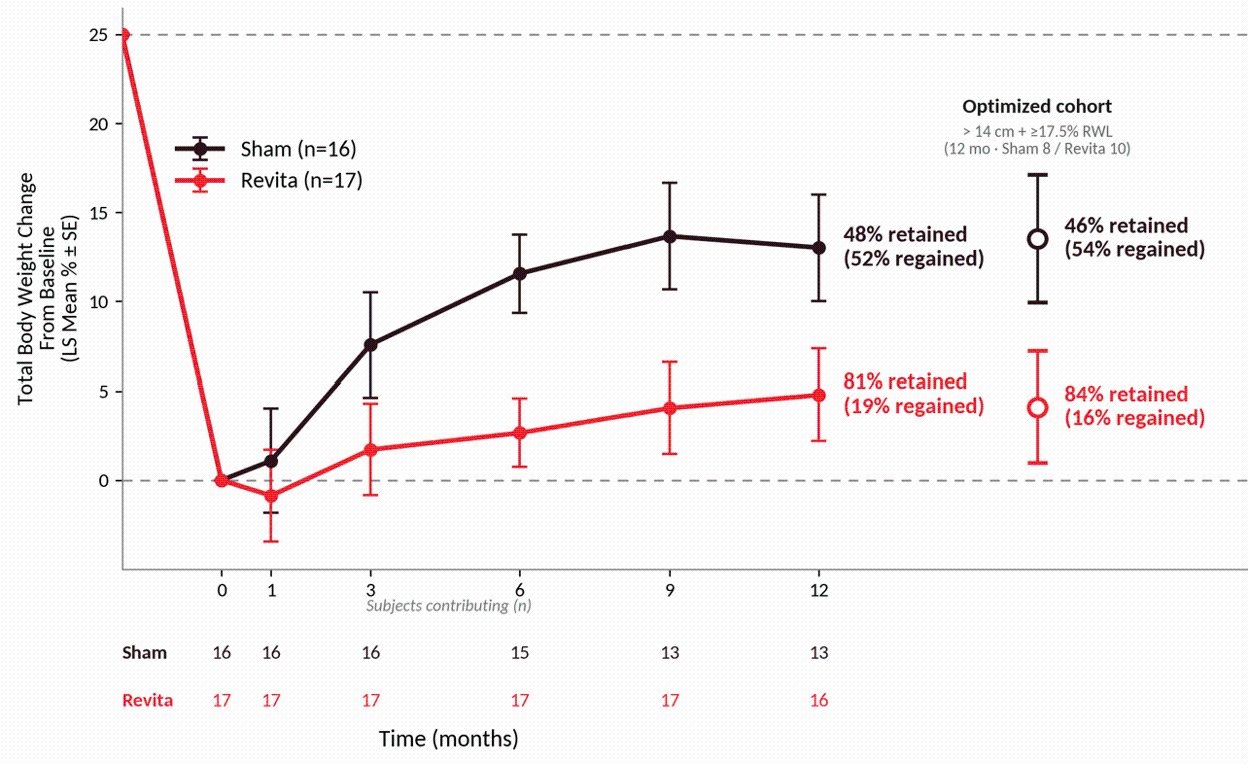
Figure 1: Change in body weight in (i) Complete Ablation population: > 14 cm duodenal ablation, no run-in weight loss restriction (Sham n=16, Revita n=17) and (ii) Optimized population: complete ablation (> 14 cm) and run-in weight loss ≥ 17.5% (Sham n=8, Revita n=10). Y-axis: LS-mean % total body-weight change from baseline; MMRM, compound-symmetry covariance, estimated at 20% run-in weight loss; error bars ± SE; n contributing shown per visit below axis. Retention = % of run-in weight loss maintained at 12 months. Exploratory REMAIN-1 Midpoint Cohort subgroup; not powered for formal inference. Abbreviations: MMRM, mixed-model repeated measures; LS-mean, least-squares mean; SE, standard error.
“The success of GLP-1 medicines has created a new unsolved problem: what happens when patients stop. Most do stop eventually, whether because of cost, side effects, or simply not wanting to inject a drug for the rest of their lives. When they stop, the weight most often comes back," said Harith Rajagopalan, M.D., Ph.D., Co-Founder and Chief Executive Officer of Fractyl. "Today's results are the first randomized, sham-controlled evidence that a single Revita procedure can keep most of the weight off for a full year after GLP-1 is stopped, without the need for ongoing medication. We eagerly anticipate an early Q4 2026 topline readout from the REMAIN-1 Pivotal Cohort with deep conviction that Revita may represent the first procedural entrant into the post-GLP-1 weight maintenance category.”
Webcast
Fractyl Health will host a webcast today, July 15, 2026, at 8:00 a.m. Eastern Time. The live webcast can be accessed by clicking this link. This webcast can also be found in the “Events” section of Fractyl’s website at ir.fractyl.com. The webcast will be archived and available for replay for at least 30 days after the event.
About REMAIN-1 Weight Maintenance Program
REMAIN-1 is Fractyl Health’s pivotal program evaluating Revita for weight maintenance in adults with obesity following discontinuation of GLP-1 therapy. The Midpoint Cohort (N=45) is a randomized, double-blind, sham-controlled study in adults who achieved at least 15% total body weight loss on tirzepatide; after discontinuing the drug, participants were randomized 2:1 to a single Revita procedure or a sham endoscopic procedure and followed for one year. The Midpoint Cohort is not powered for formal statistical significance; results are descriptive and are intended to characterize the treatment effect and inform the Pivotal Cohort design and execution. Results in the Midpoint Cohort at one year are evaluated per the pre-specified statistical analysis plan defined for the pivotal study, with GLP-1 weight loss fitted as a
covariate on treatment effects, calculated as least-square means at the 20% reference. Both a Complete Ablation cohort (defined as >14cm of duodenal ablation) and an Optimized responder population (with > 14 cm duodenal ablation and ≥17.5% run-in weight loss) are pre-specified key secondary endpoints in the pivotal study. The Pivotal Cohort is fully randomized and well powered at the expected effect size to clear both co-primary endpoints in the modified intention-to-treat (mITT) population: (i) weight regain at six months (Revita versus sham) and (ii) a responder rate defined as the proportion of participants maintaining at least 5% total body weight loss relative to their pre-tirzepatide weight at one year. Topline six-month randomized data from the Pivotal Cohort are anticipated in early Q4 2026.
About Revita
Revita is Fractyl Health’s lead product candidate, designed to remodel the duodenal lining via a one-time, minimally invasive endoscopic procedure intended to restore healthy nutrient sensing and signaling disrupted by chronic metabolic disease. Revita has received Breakthrough Device designation from the FDA for weight maintenance in people with obesity who discontinue GLP-1 therapies. Revita is for investigational use only in the United States and is CE marked in the European Union and United Kingdom.
About Fractyl Health
Fractyl Health is a clinical-stage metabolic therapeutics company advancing two differentiated candidates designed to target the root causes of obesity and T2D: Revita, a procedural therapy in pivotal development for post-GLP-1 weight maintenance, and Rejuva, an AAV-based gene therapy platform with its lead candidate RJVA-001 entering first-in-human clinical studies. Fractyl’s goal is to advance metabolic disease treatment from chronic management toward prevention and reversal of disease. Fractyl is headquartered in Burlington, Massachusetts.
Forward-Looking Statements
This press release contains forward-looking statements within the meaning of the Private Securities Litigation Reform Act of 1995. All statements contained in this press release that do not relate to matters of historical fact are forward-looking statements. These statements may be identified by words such as “aims,” “anticipates,” “believes,” “could,” “estimates,” “expects,” “forecasts,” “goal,” “intends,” “may,” “plans,” “possible,” “potential,” “seeks,” “will” and variations of these words or similar expressions that are intended to identify forward-looking statements, although not all forward-looking statements contain these words. Forward-looking statements in this press release include, without limitation, statements regarding: the promise and potential impact of our clinical trial data and product candidates, including Revita’s potential for maintaining weight loss after GLP-1 based therapy discontinuation and stabilizing cardiometabolic parameters; the translatability of results and scalability of technique related to Revita; the design, initiation, timing and results of clinical enrollment and any clinical studies or readouts, including readouts from the REMAIN-1 Midpoint Cohort and the REMAIN-1 Pivotal Cohort; the potential launch or commercialization of any of our product candidates or products; our regulatory strategy, including potential use and benefits of the De Novo pathway (FDA pre-submission feedback is advisory and non-binding, and there is no assurance that FDA will accept a De Novo marketing application submission or that Revita will receive marketing authorization); the potential treatment population or benefits for any of our product candidates or products; our strategic and product development objectives and goals; and the timing of any of the foregoing. These statements are neither promises nor guarantees, but involve known and unknown risks, uncertainties and other important factors that may cause our actual results, performance or achievements to be materially different from any future results, performance or achievements expressed or implied by the forward-looking statements, including, but not limited to, the risks that are discussed more fully in our filings with the Securities and Exchange Commission (the SEC), including the “Risk Factors” section of our Annual Report on Form 10-K for the year ended December 31, 2025, filed with the SEC on March 24, 2026, and other documents we subsequently file with or furnish to the SEC, including our Quarterly Report on Form 10-Q for the quarter ended March 31, 2026, filed with the SEC on May 12, 2026. These forward-looking statements are based on management’s current estimates and expectations. While we may elect to update such forward-looking
statements at some point in the future, we disclaim any obligation to do so, even if subsequent events cause our views to change.
Contact
Brian Luque, Head of Investor Relations and Corporate Development
IR@fractyl.com, 951.206.1200
Positive One-Year Randomized REMAIN-1 Midpoint Cohort Results July 15, 2026 Revita is for investigational use only in the United States. Revita has a CE mark in the EU/UK. Exhibit 99.2
Legal disclaimer The study database has not been locked as this is an ongoing study, and the data are subject to further cleaning and validation. Forward-looking statements This presentation contains forward-looking statements within the meaning of the Private Securities Litigation Reform Act of 1995. All statements contained in this presentation that do not relate to matters of historical fact are forward-looking statements. These statements may be identified by words such as “aims,” “anticipates,” “believes,” “could,” “estimates,” “expects,” “forecasts,” “goal,” “intends,” “may,” “plans,” “possible,” “potential,” “seeks,” “will” and variations of these words or similar expressions that are intended to identify forward-looking statements, although not all forward-looking statements contain these words. Forward-looking statements in this presentation include, without limitation, statements regarding: the promise and potential impact of our clinical trial data and product candidates, including Revita’s potential for maintaining weight loss after GLP-1 based therapy discontinuation and stabilizing cardiometabolic parameters; the translatability of results and scalability of technique related to Revita; the design, initiation, timing and results of clinical enrollment and any clinical studies or readouts, including readouts from the REMAIN-1 Midpoint Cohort and the REMAIN-1 Pivotal Cohort; the potential launch or commercialization of any of our product candidates or products; our regulatory strategy, including potential use and benefits of the De Novo pathway (FDA pre-submission feedback is advisory and non-binding, and there is no assurance that FDA will accept a De Novo marketing application submission or that Revita will receive marketing authorization); the potential treatment population or benefits for any of our product candidates or products; our strategic and product development objectives and goals; and the timing of any of the foregoing. These statements are neither promises nor guarantees, but involve known and unknown risks, uncertainties and other important factors that may cause our actual results, performance or achievements to be materially different from any future results, performance or achievements expressed or implied by the forward-looking statements, including, but not limited to, the risks that are discussed more fully in our filings with the Securities and Exchange Commission (the SEC), including the “Risk Factors” section of our Annual Report on Form 10-K for the year ended December 31, 2025, filed with the SEC on March 24, 2026, and other documents we subsequently file with or furnish to the SEC, including our Quarterly Report on Form 10-Q for the quarter ended March 31, 2026, filed with the SEC on May 12, 2026. These forward-looking statements are based on management’s current estimates and expectations. While we may elect to update such forward-looking statements at some point in the future, we disclaim any obligation to do so, even if subsequent events cause our views to change. ©2026 Fractyl Health, Inc. All Rights Reserved. Industry data This presentation also contains estimates, projections and other information concerning our industry, our business and the markets in which we operate. Information that is based on estimates, forecasts, projections, market research or similar methodologies is inherently subject to uncertainties and actual events or circumstances may differ materially from events and circumstances that are assumed in this information. Unless otherwise expressly stated, we obtained this industry, business, market, and other data from our own internal estimates and research as well as from reports, research, surveys, studies, and similar data prepared by market research firms and other third parties, industry, medical and general publications, government data and similar sources. While we are not aware of any misstatements regarding any third-party information presented in this presentation, their estimates, in particular, as they relate to projections, involve numerous assumptions, are subject to risks and uncertainties and are subject to change based on various factors. Trademarks This presentation may contain trademarks, service marks, trade names and copyrights of the Company and other companies, which are the property of their respective owners. The use herein does not imply an affiliation with, or endorsement by, the owners of these trademarks, service marks, trade names and copyrights. Third-party logos herein may be provided simply for illustrative purposes only. Inclusion of such logos does not necessarily imply affiliation with or endorsement by such firms or businesses. There is no guarantee that the Company will work, or continue to work, with any of the firms or businesses whose logos are included herein in the future. This presentation shall not constitute an offer to sell or the solicitation of an offer to buy securities, nor shall there be any sale of securities in any state or jurisdiction in which such offer, solicitation, or sale would be unlawful prior to registration or qualification under the securities laws of any such state or jurisdiction.
Agenda REMAIN-1 Midpoint Cohort One-Year Results ©2026 Fractyl Health, Inc. All Rights Reserved. 01 REMAIN-1 Midpoint Cohort One-year results Up to 84% of weight loss retained with Revita vs 46% with sham at one year when an adequate dose of ablation is used 02 KOL Discussant: Dr. Adarsh Thaker Co-lead, UCLA Bariatric Endoscopy Program and a Principal Investigator in REMAIN-1
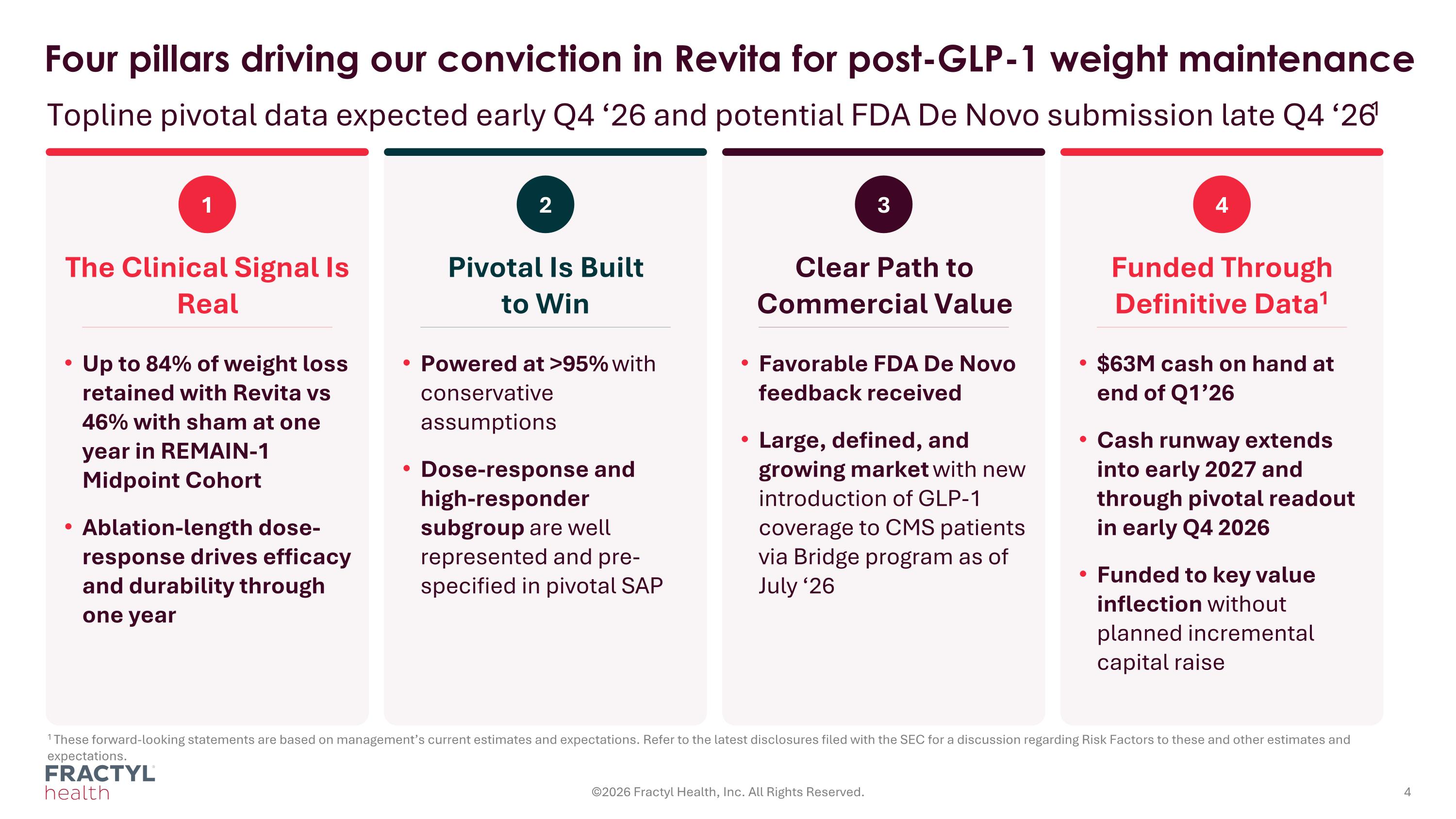
1 These forward-looking statements are based on management’s current estimates and expectations. Refer to the latest disclosures filed with the SEC for a discussion regarding Risk Factors to these and other estimates and expectations. Four pillars driving our conviction in Revita for post-GLP-1 weight maintenance Topline pivotal data expected early Q4 ‘26 and potential FDA De Novo submission late Q4 ‘261 ©2026 Fractyl Health, Inc. All Rights Reserved. 1 The Clinical Signal Is Real Up to 84% of weight loss retained with Revita vs 46% with sham at one year in REMAIN-1 Midpoint Cohort Ablation-length dose-response drives efficacy and durability through one year 2 Pivotal Is Built to Win Powered at >95% with conservative assumptions Dose-response and high-responder subgroup are well represented and pre-specified in pivotal SAP 3 Clear Path to Commercial Value Favorable FDA De Novo feedback received Large, defined, and growing market with new introduction of GLP-1 coverage to CMS patients via Bridge program as of July ‘26 4 Funded Through Definitive Data1 $63M cash on hand at end of Q1’26 Cash runway extends into early 2027 and through pivotal readout in early Q4 2026 Funded to key value inflection without planned incremental capital raise
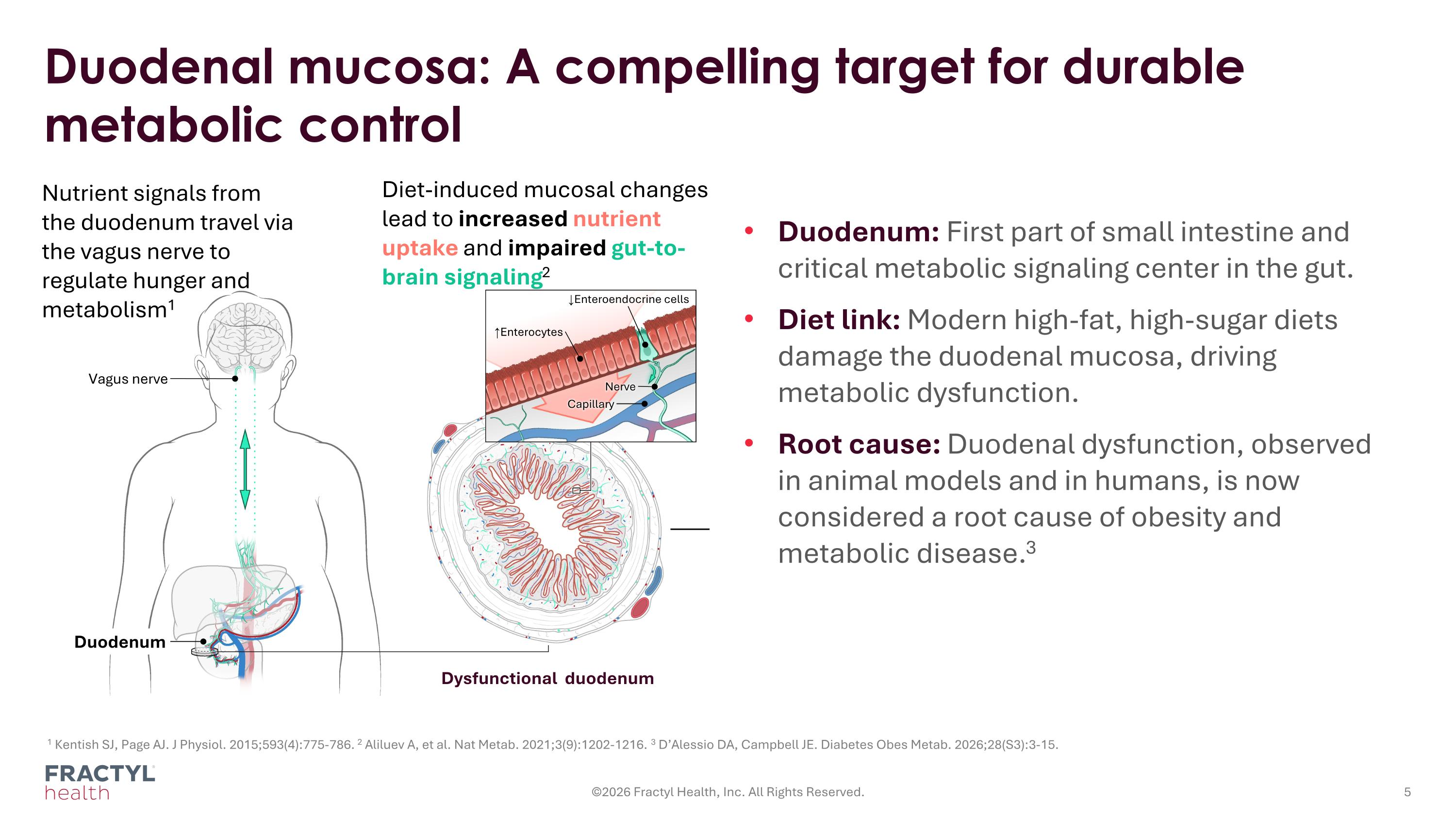
Duodenal mucosa: A compelling target for durable metabolic control ©2026 Fractyl Health, Inc. All Rights Reserved. 1 Kentish SJ, Page AJ. J Physiol. 2015;593(4):775-786. 2 Aliluev A, et al. Nat Metab. 2021;3(9):1202-1216. 3 D’Alessio DA, Campbell JE. Diabetes Obes Metab. 2026;28(S3):3-15. Duodenum Nutrient signals from the duodenum travel via the vagus nerve to regulate hunger and metabolism1 Diet-induced mucosal changes lead to increased nutrient uptake and impaired gut-to-brain signaling2 Vagus nerve Dysfunctional duodenum ↑Enterocytes ↓Enteroendocrine cells Nerve Capillary Duodenum: First part of small intestine and critical metabolic signaling center in the gut. Diet link: Modern high-fat, high-sugar diets damage the duodenal mucosa, driving metabolic dysfunction. Root cause: Duodenal dysfunction, observed in animal models and in humans, is now considered a root cause of obesity and metabolic disease.3
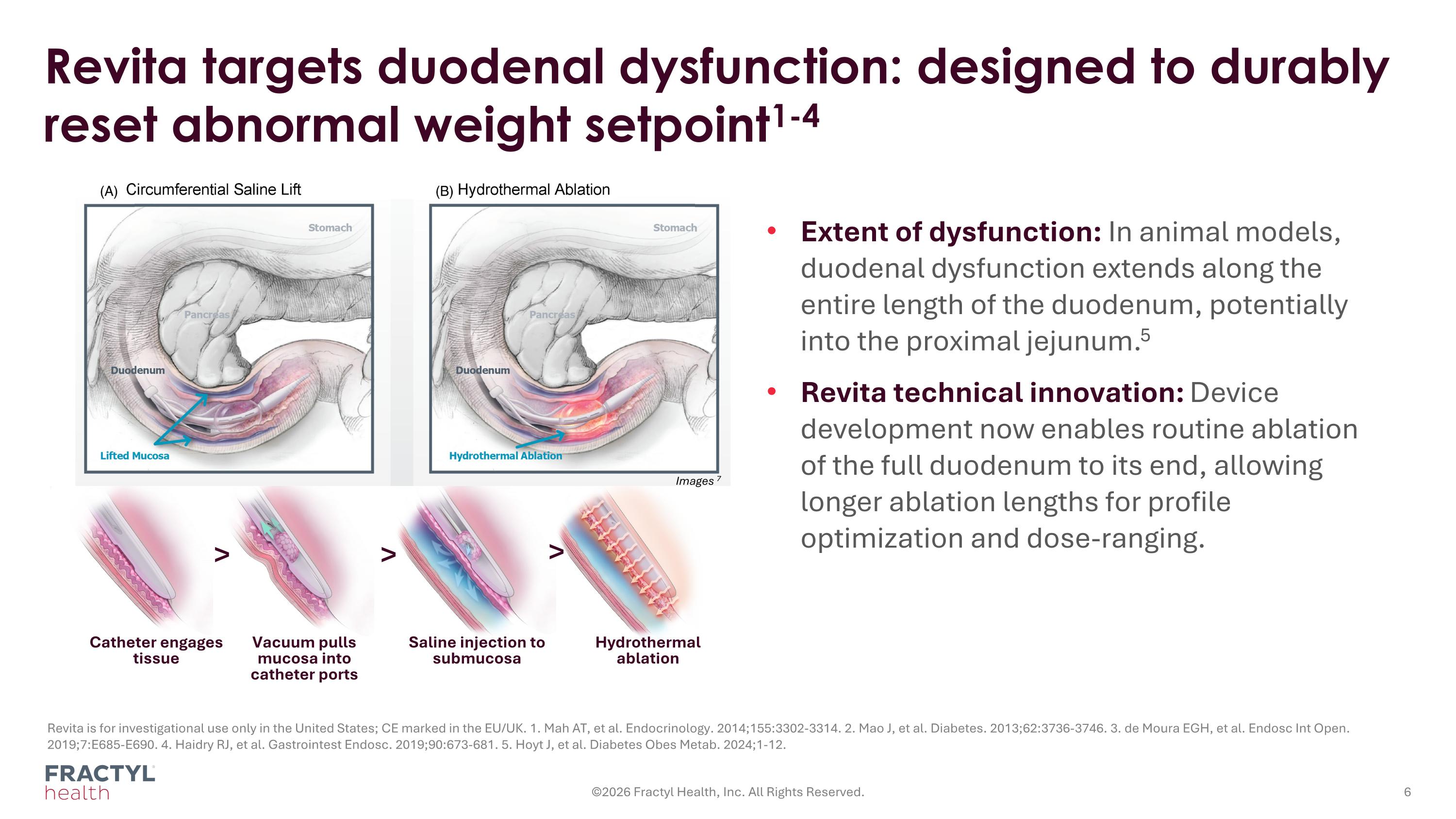
Revita targets duodenal dysfunction: designed to durably reset abnormal weight setpoint1-4 ©2026 Fractyl Health, Inc. All Rights Reserved. Revita is for investigational use only in the United States; CE marked in the EU/UK. 1. Mah AT, et al. Endocrinology. 2014;155:3302-3314. 2. Mao J, et al. Diabetes. 2013;62:3736-3746. 3. de Moura EGH, et al. Endosc Int Open. 2019;7:E685-E690. 4. Haidry RJ, et al. Gastrointest Endosc. 2019;90:673-681. 5. Hoyt J, et al. Diabetes Obes Metab. 2024;1-12. Catheter engages �tissue Vacuum pulls mucosa into catheter ports Saline injection to submucosa Hydrothermal ablation > > > Images 7 Extent of dysfunction: In animal models, duodenal dysfunction extends along the entire length of the duodenum, potentially into the proximal jejunum.5 Revita technical innovation: Device development now enables routine ablation of the full duodenum to its end, allowing longer ablation lengths for profile optimization and dose-ranging.
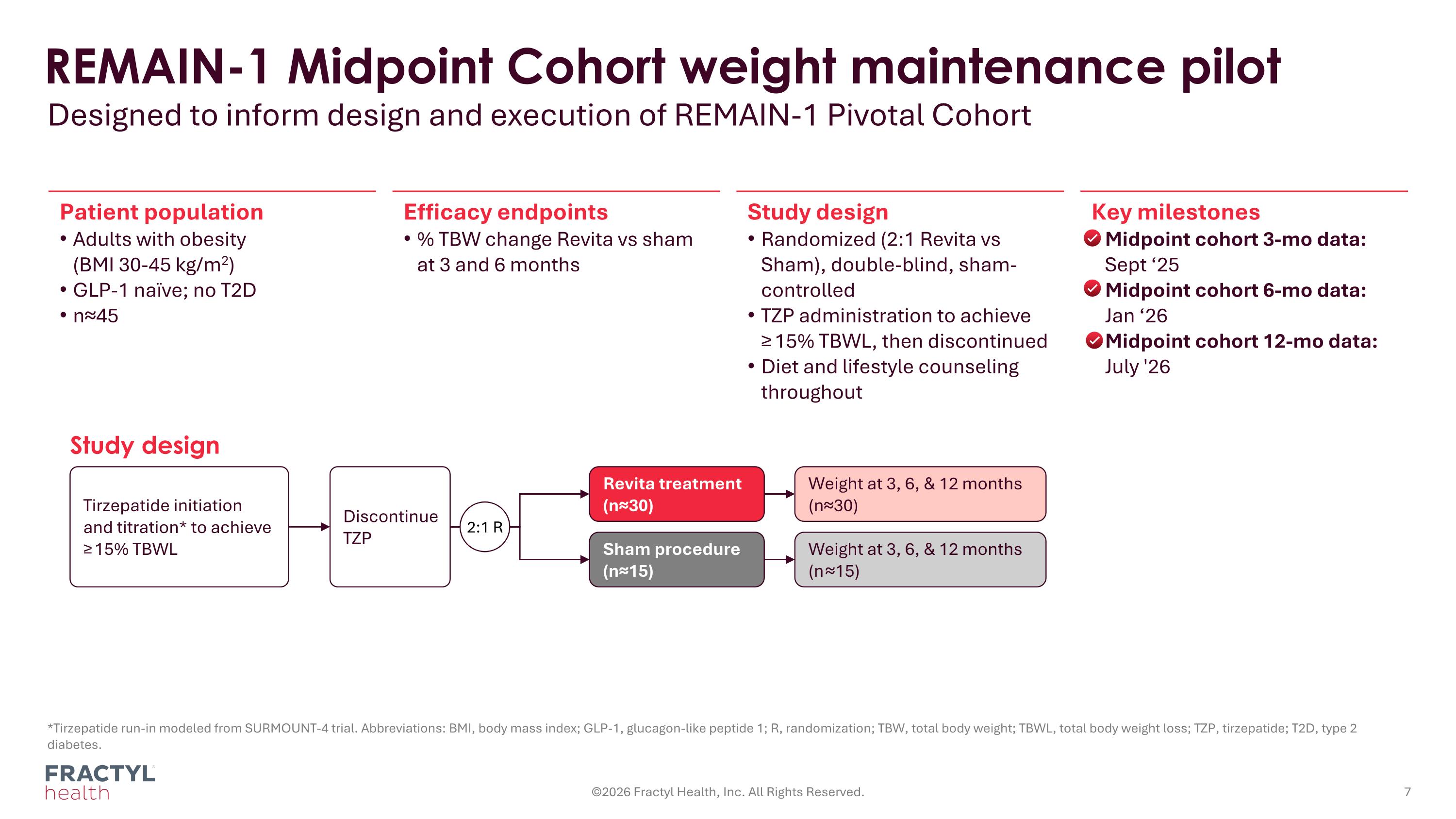
REMAIN-1 Midpoint Cohort weight maintenance pilot Designed to inform design and execution of REMAIN-1 Pivotal Cohort *Tirzepatide run-in modeled from SURMOUNT-4 trial. Abbreviations: BMI, body mass index; GLP-1, glucagon-like peptide 1; R, randomization; TBW, total body weight; TBWL, total body weight loss; TZP, tirzepatide; T2D, type 2 diabetes. ©2026 Fractyl Health, Inc. All Rights Reserved. Patient population Adults with obesity�(BMI 30-45 kg/m2) GLP-1 naïve; no T2D n≈45 Efficacy endpoints % TBW change Revita vs sham at 3 and 6 months Study design Randomized (2:1 Revita vs Sham), double-blind, sham-controlled TZP administration to achieve�≥ 15% TBWL, then discontinued Diet and lifestyle counseling throughout Key milestones Midpoint cohort 3-mo data: Sept ‘25 Midpoint cohort 6-mo data:�Jan ‘26 Midpoint cohort 12-mo data:�July '26 Tirzepatide initiation�and titration* to achieve�≥ 15% TBWL Revita treatment�(n≈30) Weight at 3, 6, & 12 months (n≈30) Sham procedure (n≈15) Weight at 3, 6, & 12 months (n ≈15) Study design Discontinue TZP 2:1 R
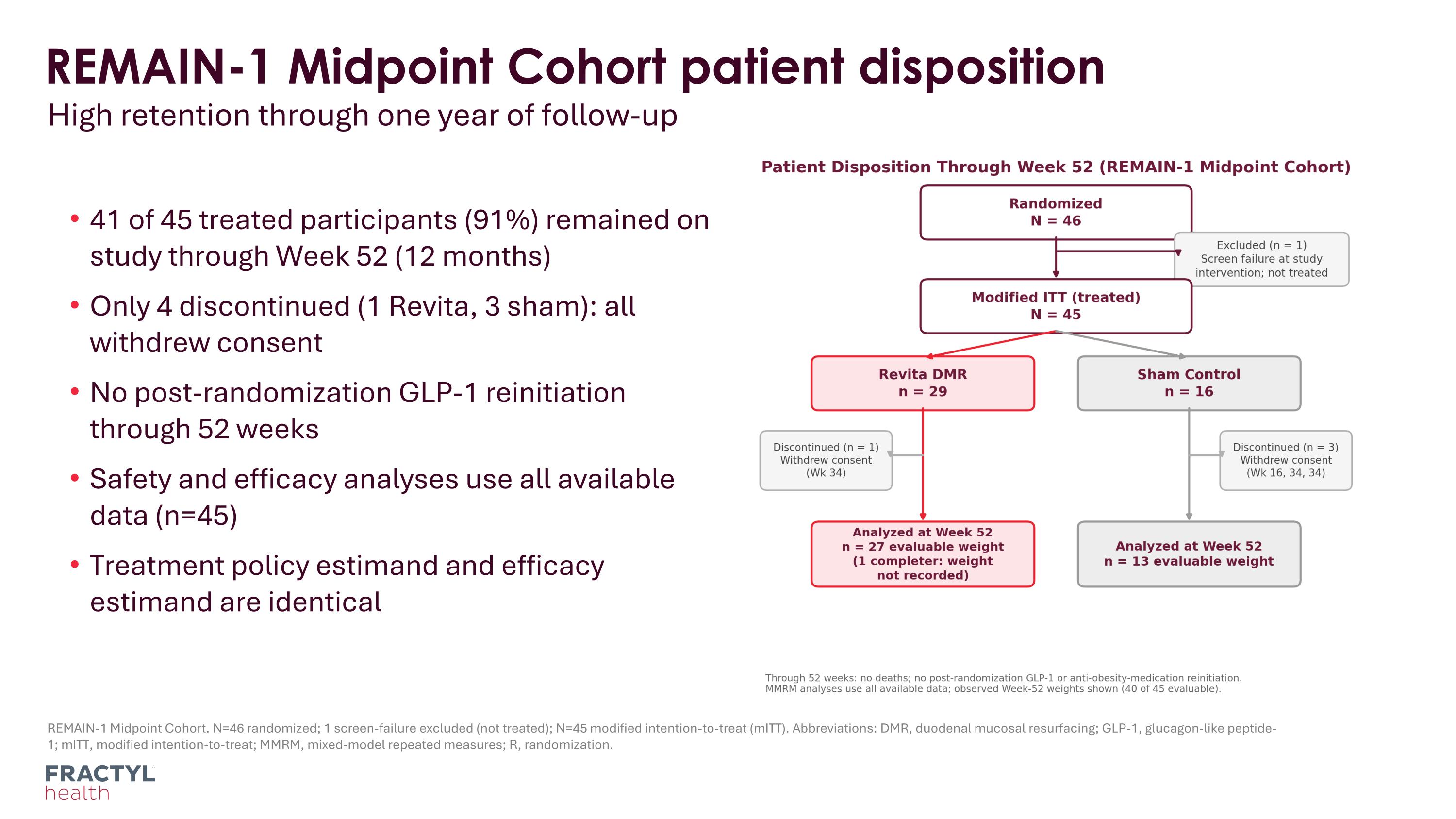
REMAIN-1 Midpoint Cohort. N=46 randomized; 1 screen-failure excluded (not treated); N=45 modified intention-to-treat (mITT). Abbreviations: DMR, duodenal mucosal resurfacing; GLP-1, glucagon-like peptide-1; mITT, modified intention-to-treat; MMRM, mixed-model repeated measures; R, randomization. REMAIN-1 Midpoint Cohort patient disposition High retention through one year of follow-up 41 of 45 treated participants (91%) remained on study through Week 52 (12 months) Only 4 discontinued (1 Revita, 3 sham): all withdrew consent No post-randomization GLP-1 reinitiation through 52 weeks Safety and efficacy analyses use all available data (n=45) Treatment policy estimand and efficacy estimand are identical
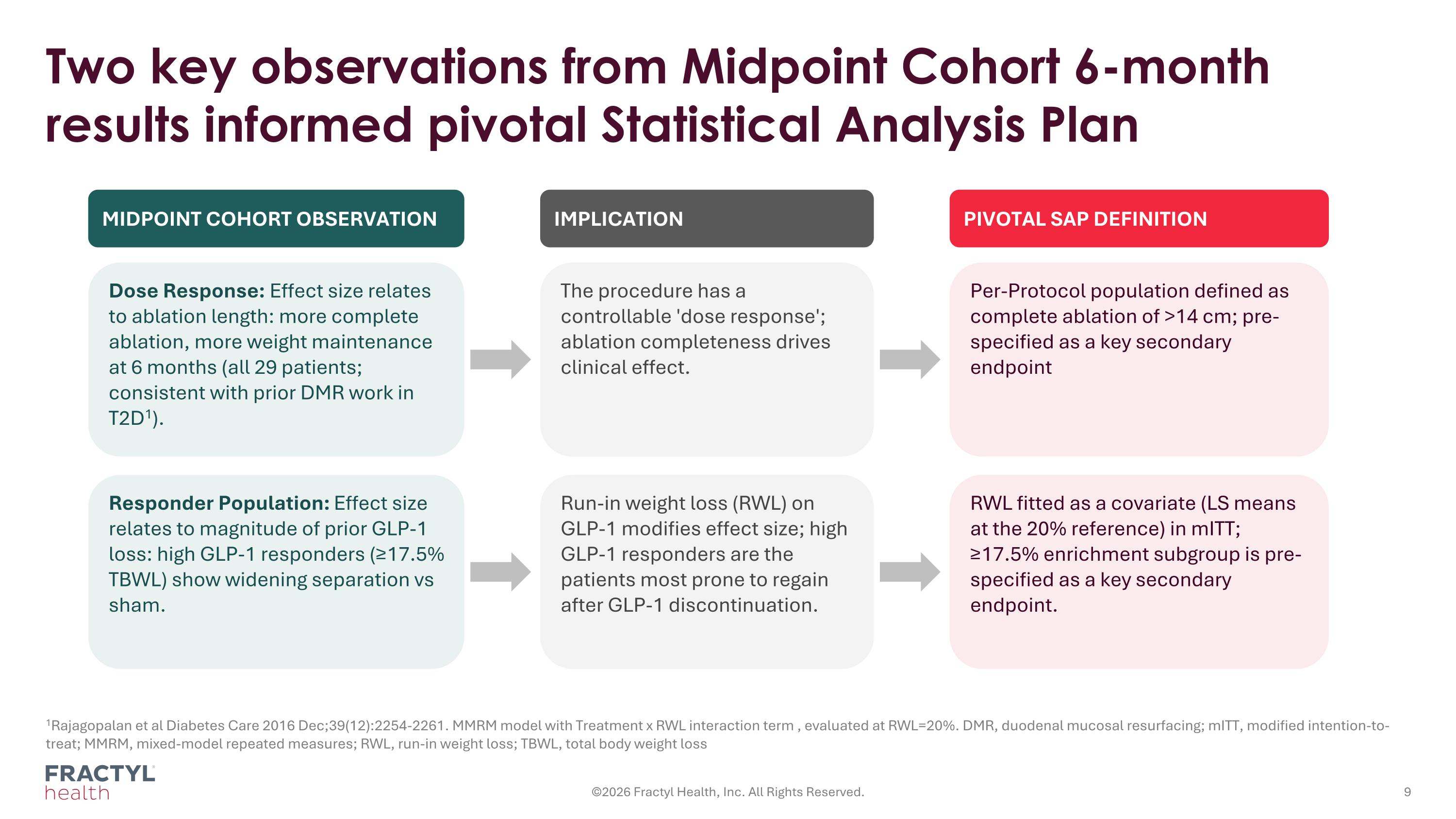
Two key observations from Midpoint Cohort 6-month results informed pivotal Statistical Analysis Plan 1Rajagopalan et al Diabetes Care 2016 Dec;39(12):2254-2261. MMRM model with Treatment x RWL interaction term , evaluated at RWL=20%. DMR, duodenal mucosal resurfacing; mITT, modified intention-to-treat; MMRM, mixed-model repeated measures; RWL, run-in weight loss; TBWL, total body weight loss ©2026 Fractyl Health, Inc. All Rights Reserved. MIDPOINT COHORT OBSERVATION IMPLICATION PIVOTAL SAP DEFINITION Dose Response: Effect size relates to ablation length: more complete ablation, more weight maintenance at 6 months (all 29 patients; consistent with prior DMR work in T2D1). The procedure has a controllable 'dose response'; ablation completeness drives clinical effect. Per-Protocol population defined as complete ablation of >14 cm; pre-specified as a key secondary endpoint Responder Population: Effect size relates to magnitude of prior GLP-1 loss: high GLP-1 responders (≥17.5% TBWL) show widening separation vs sham. Run-in weight loss (RWL) on GLP-1 modifies effect size; high GLP-1 responders are the patients most prone to regain after GLP-1 discontinuation. RWL fitted as a covariate (LS means at the 20% reference) in mITT; ≥17.5% enrichment subgroup is pre-specified as a key secondary endpoint.
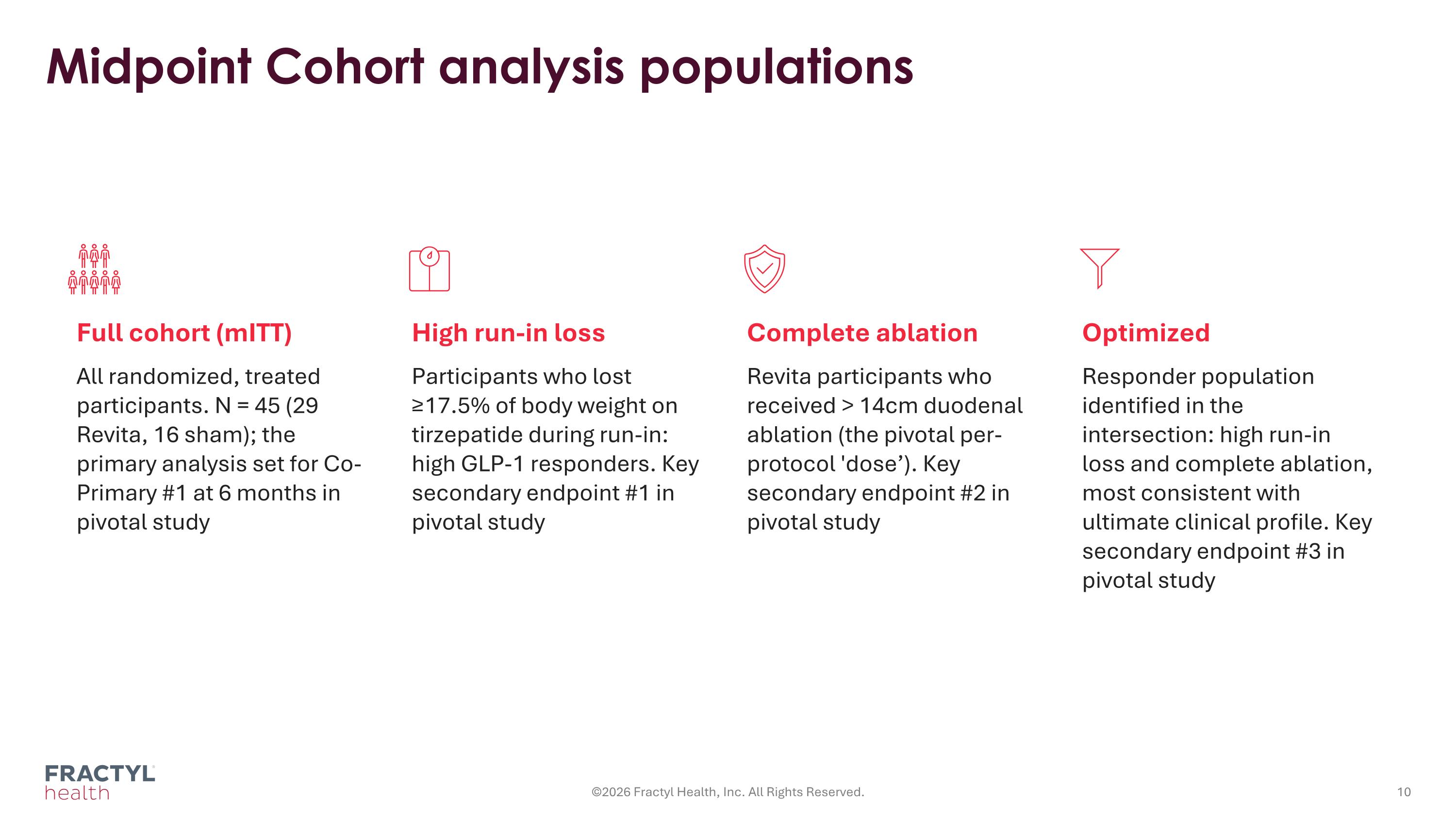
Midpoint Cohort analysis populations ©2026 Fractyl Health, Inc. All Rights Reserved. Full cohort (mITT) All randomized, treated participants. N = 45 (29 Revita, 16 sham); the primary analysis set for Co-Primary #1 at 6 months in pivotal study High run-in loss Participants who lost ≥17.5% of body weight on tirzepatide during run-in: high GLP-1 responders. Key secondary endpoint #1 in pivotal study Complete ablation Revita participants who received > 14cm duodenal ablation (the pivotal per-protocol 'dose’). Key secondary endpoint #2 in pivotal study Optimized Responder population identified in the intersection: high run-in loss and complete ablation, most consistent with ultimate clinical profile. Key secondary endpoint #3 in pivotal study
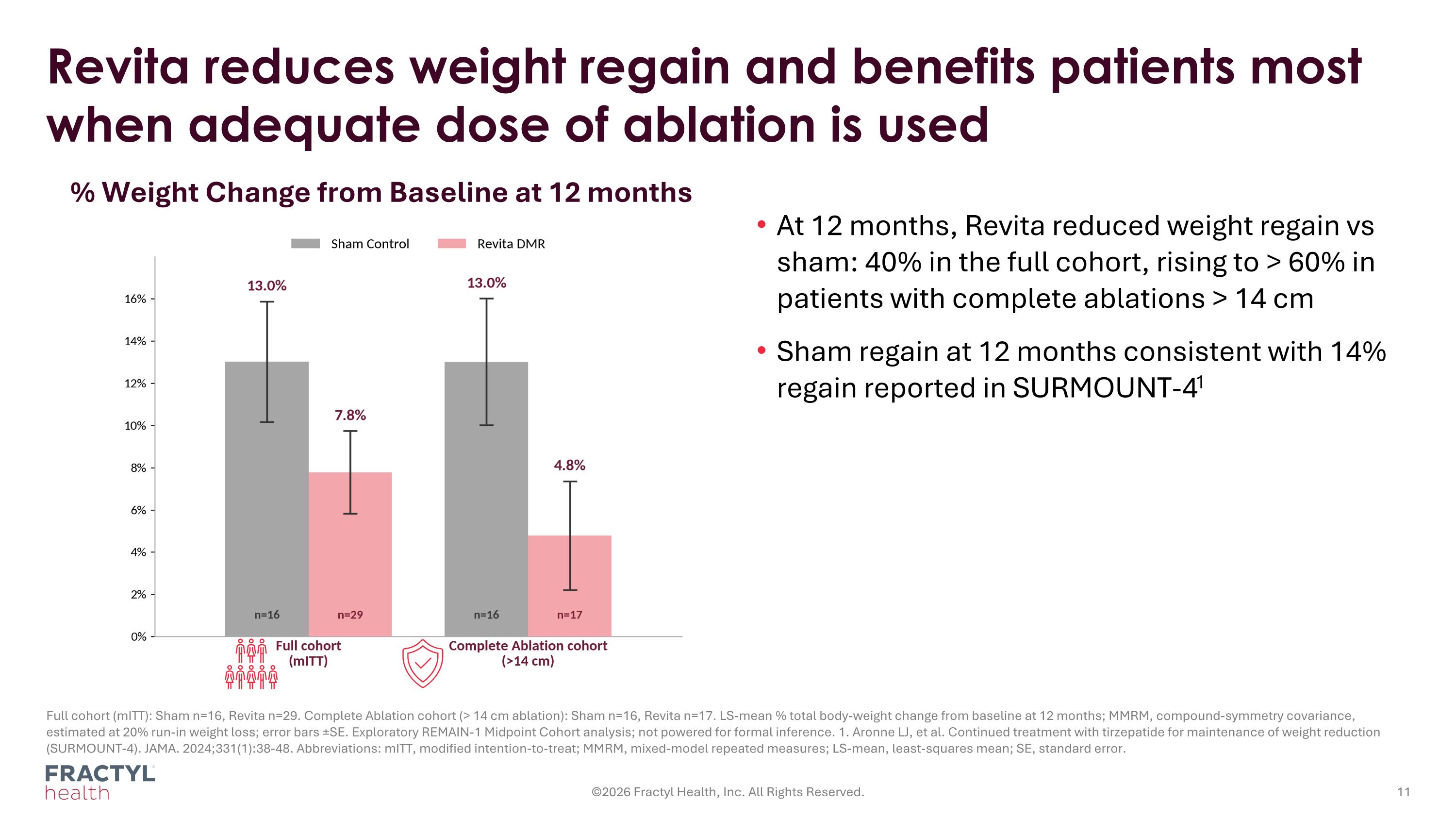
Revita reduces weight regain and benefits patients most when adequate dose of ablation is used Full cohort (mITT): Sham n=16, Revita n=29. Complete Ablation cohort (> 14 cm ablation): Sham n=16, Revita n=17. LS-mean % total body-weight change from baseline at 12 months; MMRM, compound-symmetry covariance, estimated at 20% run-in weight loss; error bars ±SE. Exploratory REMAIN-1 Midpoint Cohort analysis; not powered for formal inference. 1. Aronne LJ, et al. Continued treatment with tirzepatide for maintenance of weight reduction (SURMOUNT-4). JAMA. 2024;331(1):38-48. Abbreviations: mITT, modified intention-to-treat; MMRM, mixed-model repeated measures; LS-mean, least-squares mean; SE, standard error. ©2026 Fractyl Health, Inc. All Rights Reserved. % Weight Change from Baseline at 12 months At 12 months, Revita reduced weight regain vs sham: 40% in the full cohort, rising to > 60% in patients with complete ablations > 14 cm Sham regain at 12 months consistent with 14% regain reported in SURMOUNT-41
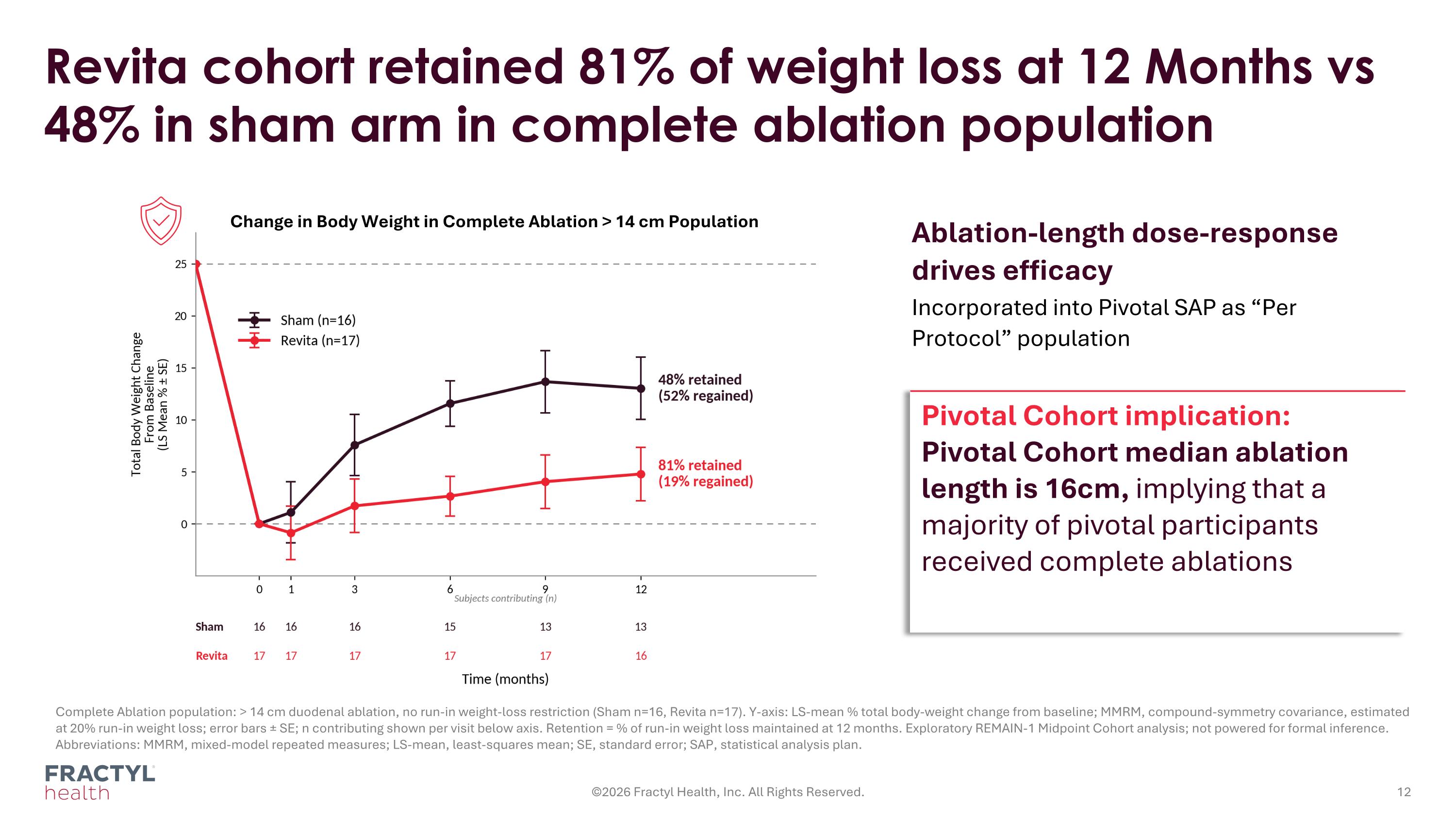
Complete Ablation population: > 14 cm duodenal ablation, no run-in weight-loss restriction (Sham n=16, Revita n=17). Y-axis: LS-mean % total body-weight change from baseline; MMRM, compound-symmetry covariance, estimated at 20% run-in weight loss; error bars ± SE; n contributing shown per visit below axis. Retention = % of run-in weight loss maintained at 12 months. Exploratory REMAIN-1 Midpoint Cohort analysis; not powered for formal inference. Abbreviations: MMRM, mixed-model repeated measures; LS-mean, least-squares mean; SE, standard error; SAP, statistical analysis plan. Revita cohort retained 81% of weight loss at 12 Months vs 48% in sham arm in complete ablation population ©2026 Fractyl Health, Inc. All Rights Reserved. Ablation-length dose-response drives efficacy Incorporated into Pivotal SAP as “Per Protocol” population Pivotal Cohort implication: Pivotal Cohort median ablation length is 16cm, implying that a majority of pivotal participants received complete ablations Change in Body Weight in Complete Ablation > 14 cm Population
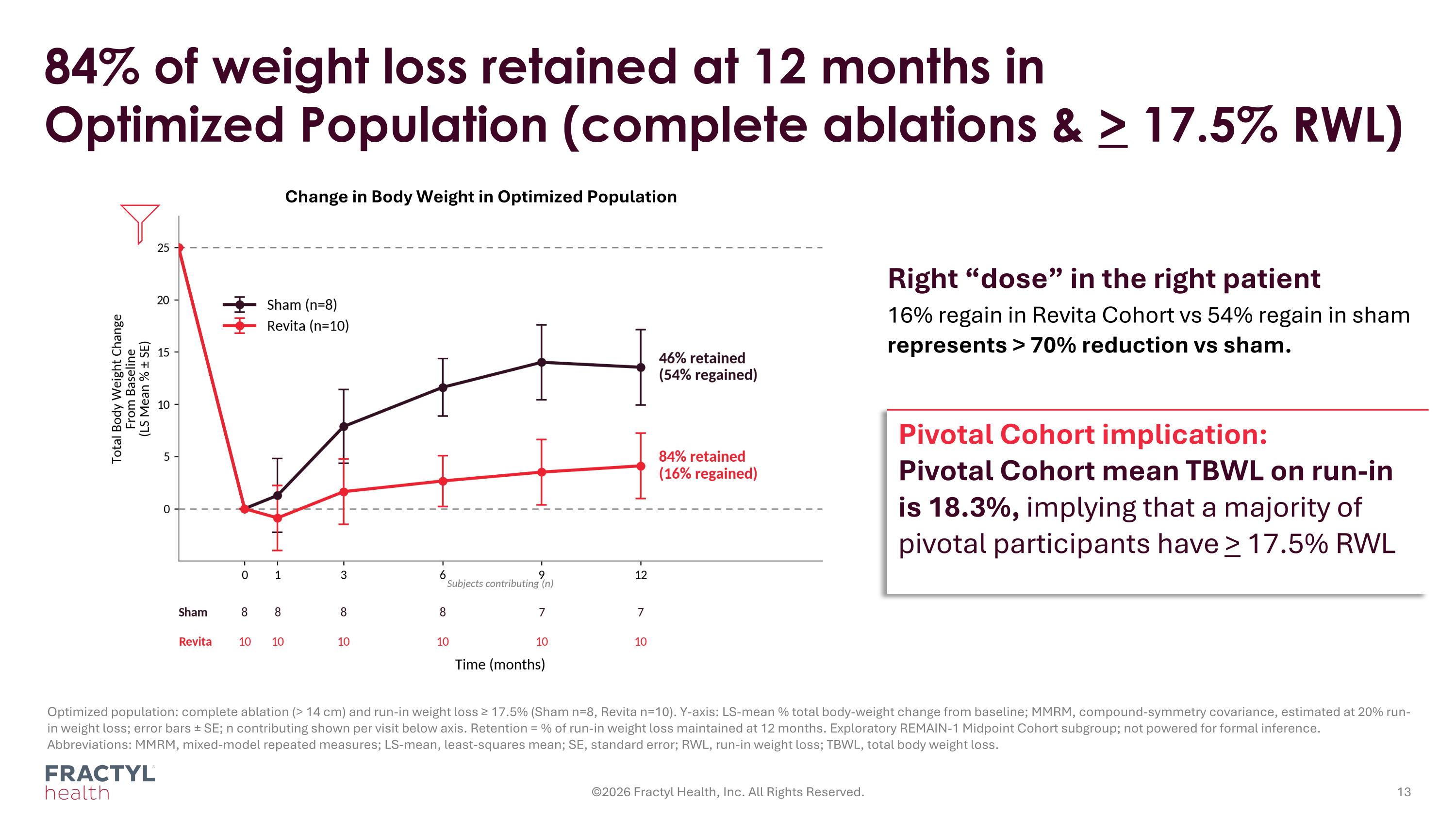
Optimized population: complete ablation (> 14 cm) and run-in weight loss ≥ 17.5% (Sham n=8, Revita n=10). Y-axis: LS-mean % total body-weight change from baseline; MMRM, compound-symmetry covariance, estimated at 20% run-in weight loss; error bars ± SE; n contributing shown per visit below axis. Retention = % of run-in weight loss maintained at 12 months. Exploratory REMAIN-1 Midpoint Cohort subgroup; not powered for formal inference. Abbreviations: MMRM, mixed-model repeated measures; LS-mean, least-squares mean; SE, standard error; RWL, run-in weight loss; TBWL, total body weight loss. 84% of weight loss retained at 12 months in Optimized Population (complete ablations & > 17.5% RWL) ©2026 Fractyl Health, Inc. All Rights Reserved. Right “dose” in the right patient 16% regain in Revita Cohort vs 54% regain in sham represents > 70% reduction vs sham. Pivotal Cohort implication: Pivotal Cohort mean TBWL on run-in is 18.3%, implying that a majority of pivotal participants have > 17.5% RWL Change in Body Weight in Optimized Population
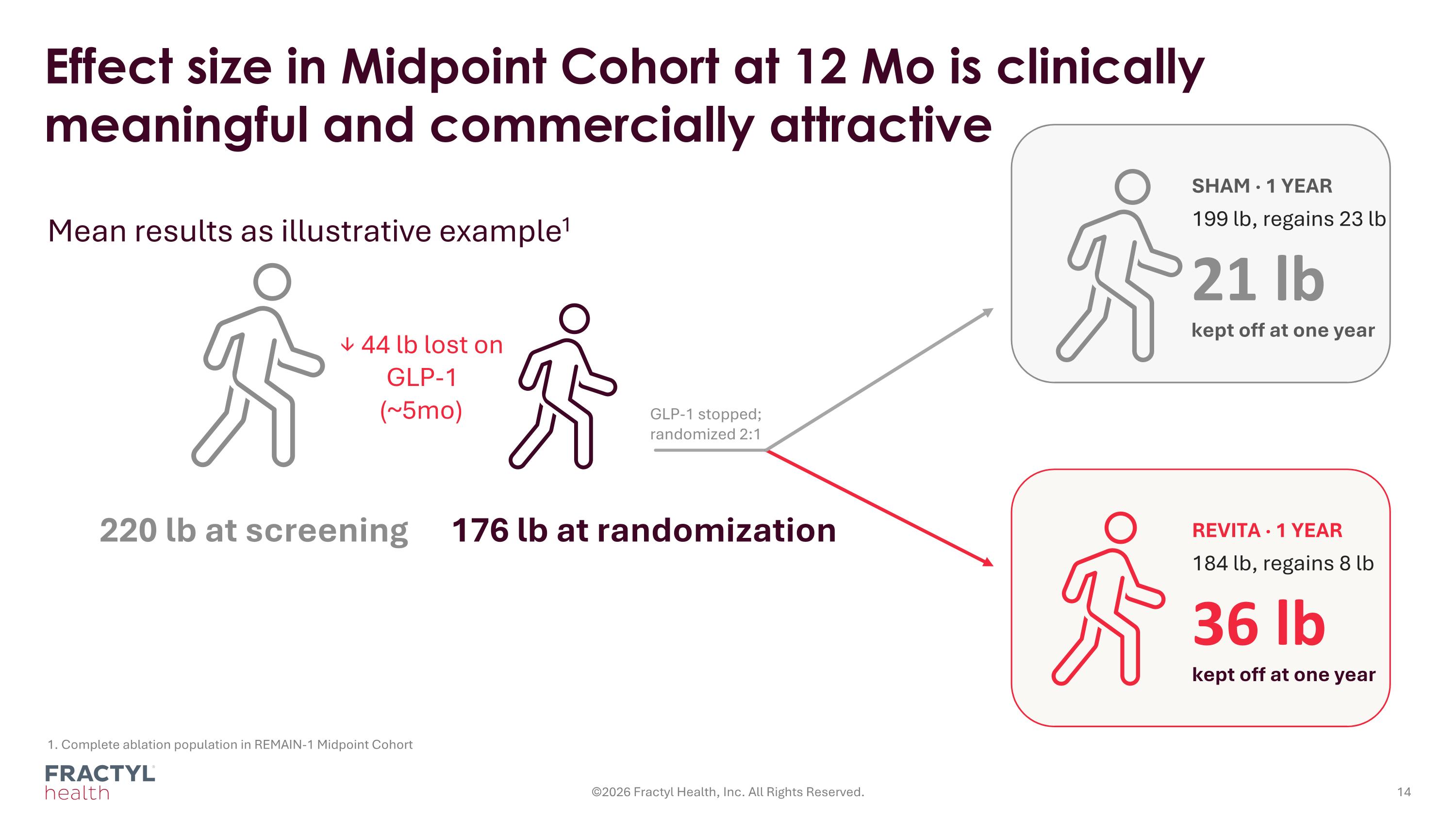
1. Complete ablation population in REMAIN-1 Midpoint Cohort Effect size in Midpoint Cohort at 12 Mo is clinically meaningful and commercially attractive Mean results as illustrative example1 ©2026 Fractyl Health, Inc. All Rights Reserved. REVITA · 1 YEAR 184 lb, regains 8 lb SHAM · 1 YEAR 199 lb, regains 23 lb GLP-1 stopped; randomized 2:1 220 lb at screening 176 lb at randomization ↓ 44 lb lost on GLP-1 (~5mo) 36 lb kept off at one year 21 lb kept off at one year
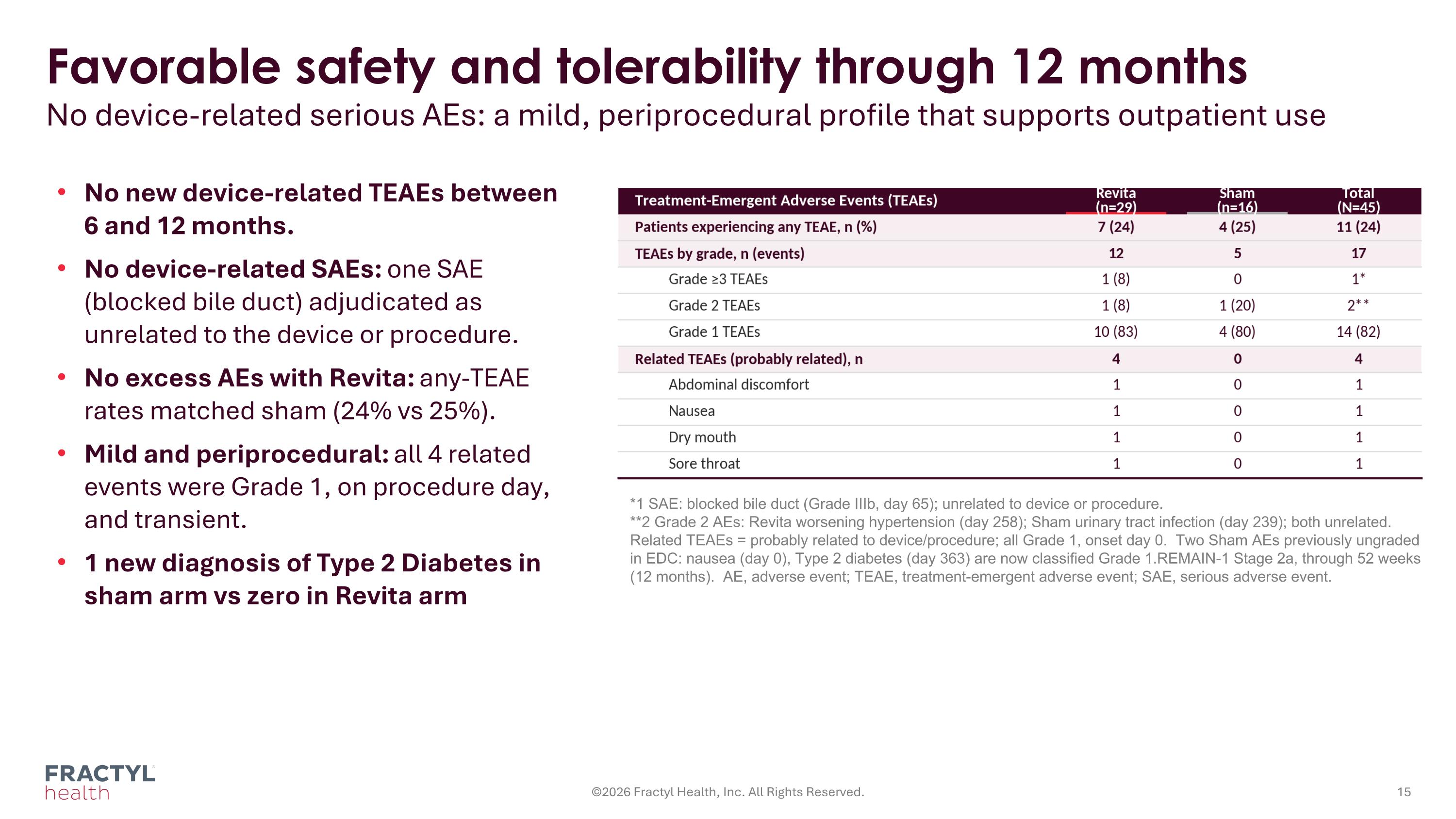
Favorable safety and tolerability through 12 months No device-related serious AEs: a mild, periprocedural profile that supports outpatient use ©2026 Fractyl Health, Inc. All Rights Reserved. No new device-related TEAEs between 6 and 12 months. No device-related SAEs: one SAE (blocked bile duct) adjudicated as unrelated to the device or procedure. No excess AEs with Revita: any-TEAE rates matched sham (24% vs 25%). Mild and periprocedural: all 4 related events were Grade 1, on procedure day, and transient. 1 new diagnosis of Type 2 Diabetes in sham arm vs zero in Revita arm *1 SAE: blocked bile duct (Grade IIIb, day 65); unrelated to device or procedure.
**2 Grade 2 AEs: Revita worsening hypertension (day 258); Sham urinary tract infection (day 239); both unrelated.
Related TEAEs = probably related to device/procedure; all Grade 1, onset day 0. Two Sham AEs previously ungraded in EDC: nausea (day 0), Type 2 diabetes (day 363) are now classified Grade 1.REMAIN-1 Stage 2a, through 52 weeks (12 months). AE, adverse event; TEAE, treatment-emergent adverse event; SAE, serious adverse event.
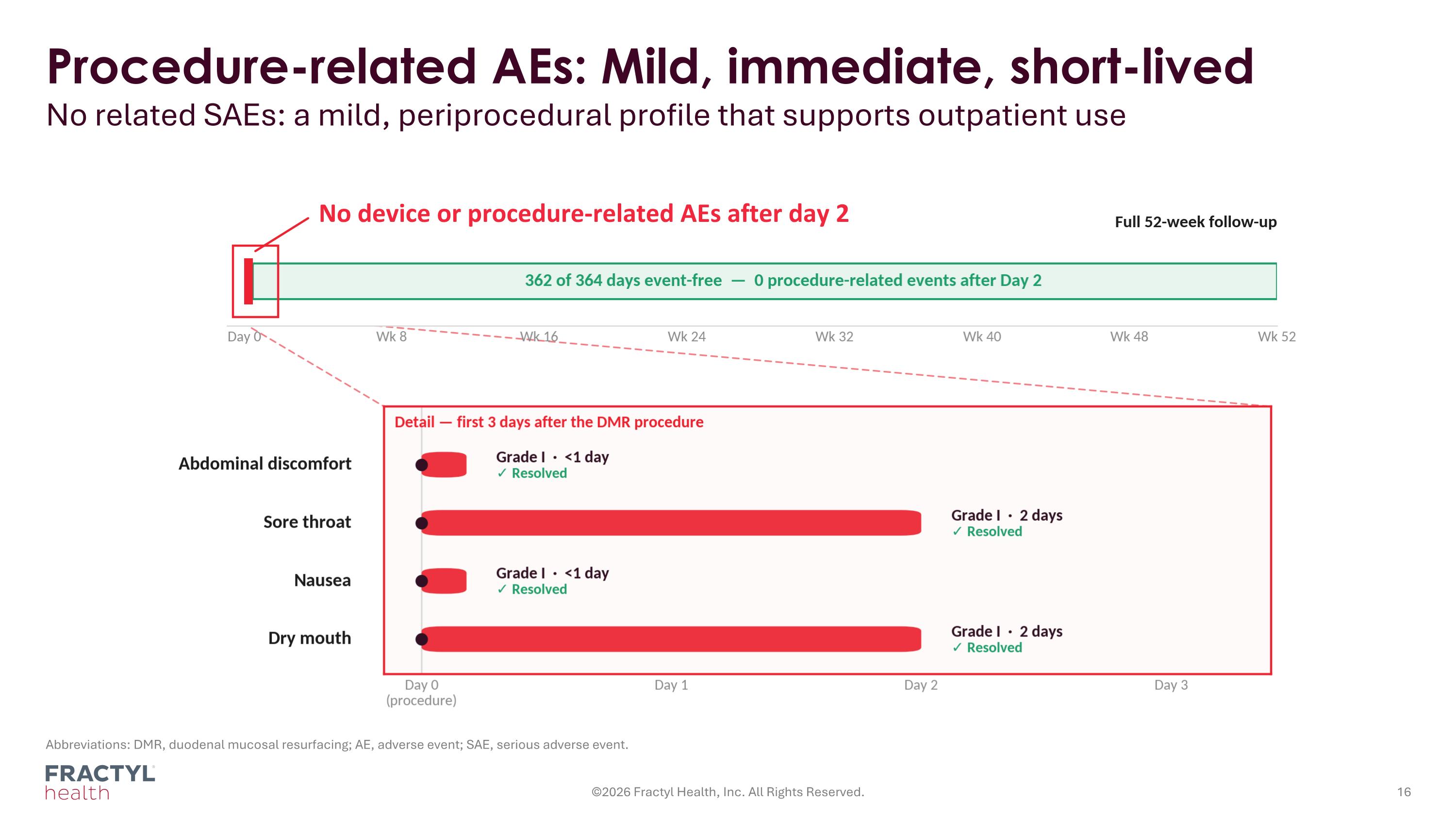
Procedure-related AEs: Mild, immediate, short-lived No related SAEs: a mild, periprocedural profile that supports outpatient use Abbreviations: DMR, duodenal mucosal resurfacing; AE, adverse event; SAE, serious adverse event. ©2026 Fractyl Health, Inc. All Rights Reserved. No device or procedure-related AEs after day 2
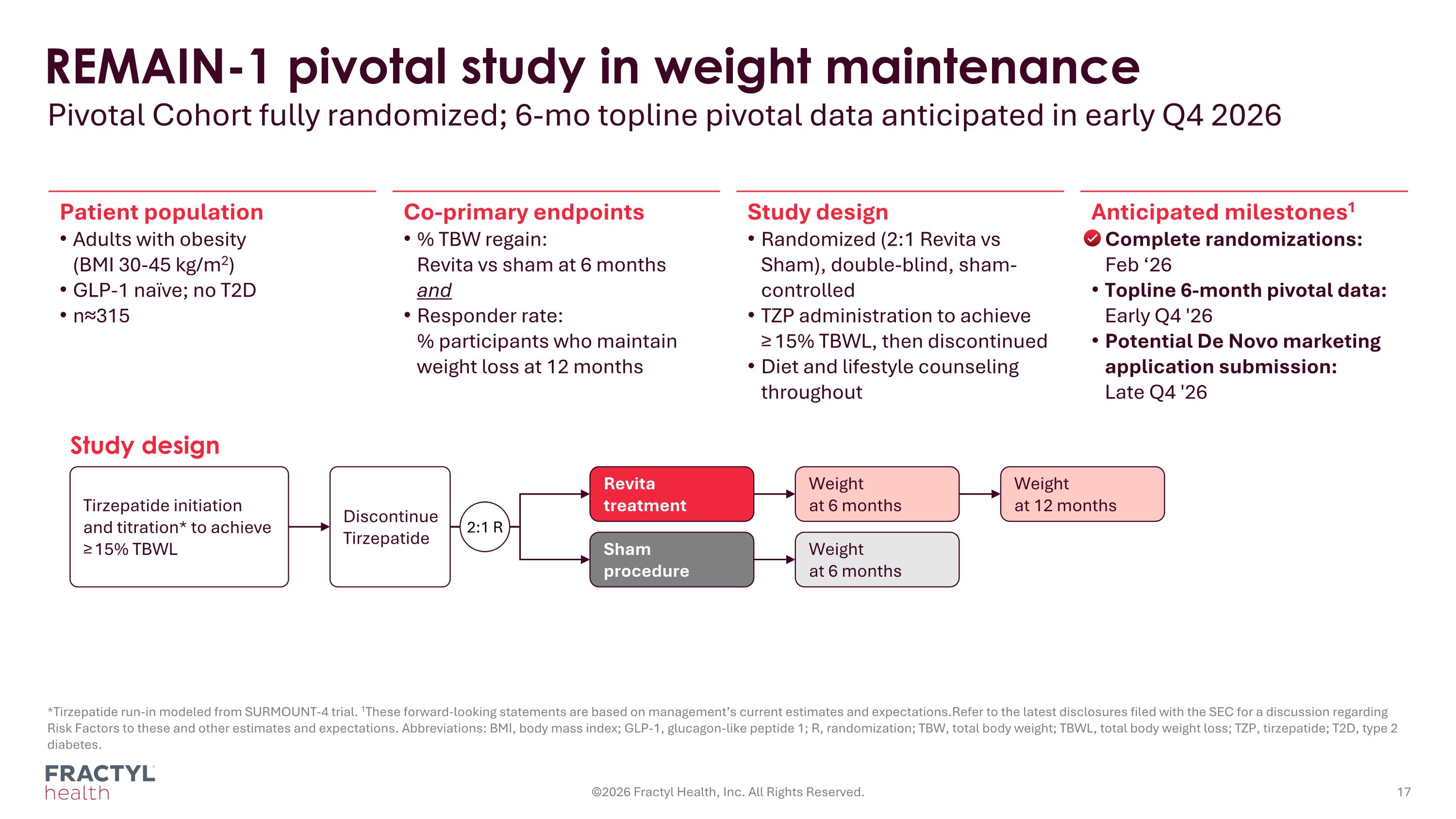
REMAIN-1 pivotal study in weight maintenance Pivotal Cohort fully randomized; 6-mo topline pivotal data anticipated in early Q4 2026 *Tirzepatide run-in modeled from SURMOUNT-4 trial. 1These forward-looking statements are based on management’s current estimates and expectations.Refer to the latest disclosures filed with the SEC for a discussion regarding Risk Factors to these and other estimates and expectations. Abbreviations: BMI, body mass index; GLP-1, glucagon-like peptide 1; R, randomization; TBW, total body weight; TBWL, total body weight loss; TZP, tirzepatide; T2D, type 2 diabetes. ©2026 Fractyl Health, Inc. All Rights Reserved. Patient population Adults with obesity�(BMI 30-45 kg/m2) GLP-1 naïve; no T2D n≈315 Co-primary endpoints % TBW regain:�Revita vs sham at 6 months�and Responder rate:�% participants who maintain weight loss at 12 months Study design Randomized (2:1 Revita vs Sham), double-blind, sham-controlled TZP administration to achieve�≥ 15% TBWL, then discontinued Diet and lifestyle counseling throughout Anticipated milestones1 Complete randomizations: �Feb ‘26 Topline 6-month pivotal data:�Early Q4 '26 Potential De Novo marketing application submission:�Late Q4 '26 Study design Tirzepatide initiation�and titration* to achieve�≥ 15% TBWL Revita treatment Weight at 6 months Weight at 12 months Sham�procedure Weight at 6 months Discontinue Tirzepatide 2:1 R
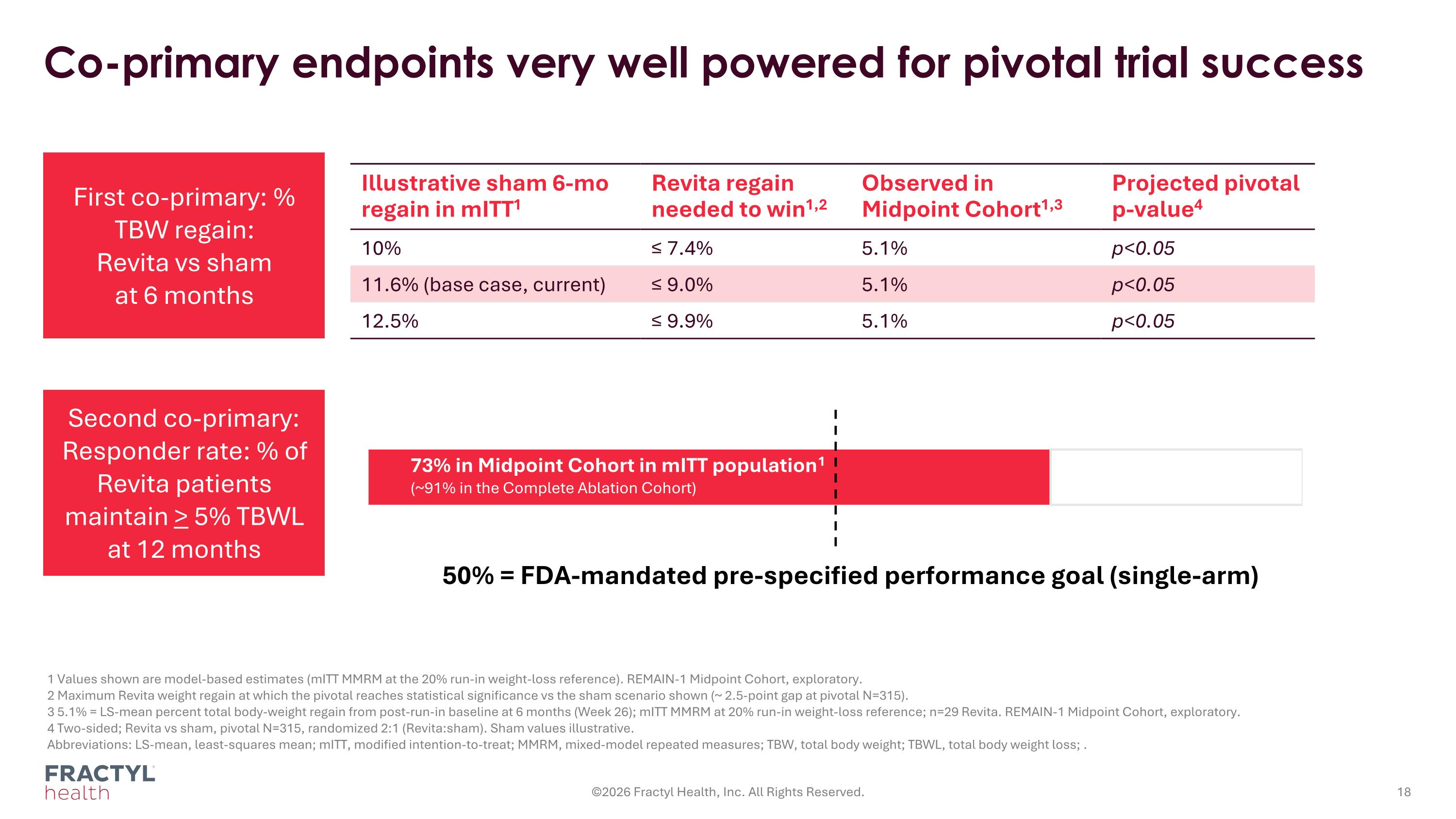
Co-primary endpoints very well powered for pivotal trial success 1 Values shown are model-based estimates (mITT MMRM at the 20% run-in weight-loss reference). REMAIN-1 Midpoint Cohort, exploratory. 2 Maximum Revita weight regain at which the pivotal reaches statistical significance vs the sham scenario shown (~ 2.5-point gap at pivotal N=315). 3 5.1% = LS-mean percent total body-weight regain from post-run-in baseline at 6 months (Week 26); mITT MMRM at 20% run-in weight-loss reference; n=29 Revita. REMAIN-1 Midpoint Cohort, exploratory. 4 Two-sided; Revita vs sham, pivotal N=315, randomized 2:1 (Revita:sham). Sham values illustrative. Abbreviations: LS-mean, least-squares mean; mITT, modified intention-to-treat; MMRM, mixed-model repeated measures; TBW, total body weight; TBWL, total body weight loss; . ©2026 Fractyl Health, Inc. All Rights Reserved. Illustrative sham 6-mo regain in mITT1 Revita regain needed to win1,2 Observed in Midpoint Cohort1,3 Projected pivotal p-value4 10% ≤ 7.4% 5.1% p<0.05 11.6% (base case, current) ≤ 9.0% 5.1% p<0.05 12.5% ≤ 9.9% 5.1% p<0.05 First co-primary: % TBW regain:�Revita vs sham at 6 months Second co-primary: Responder rate: % of Revita patients maintain > 5% TBWL at 12 months 50% = FDA-mandated pre-specified performance goal (single-arm) 73% in Midpoint Cohort in mITT population1 (~91% in the Complete Ablation Cohort)
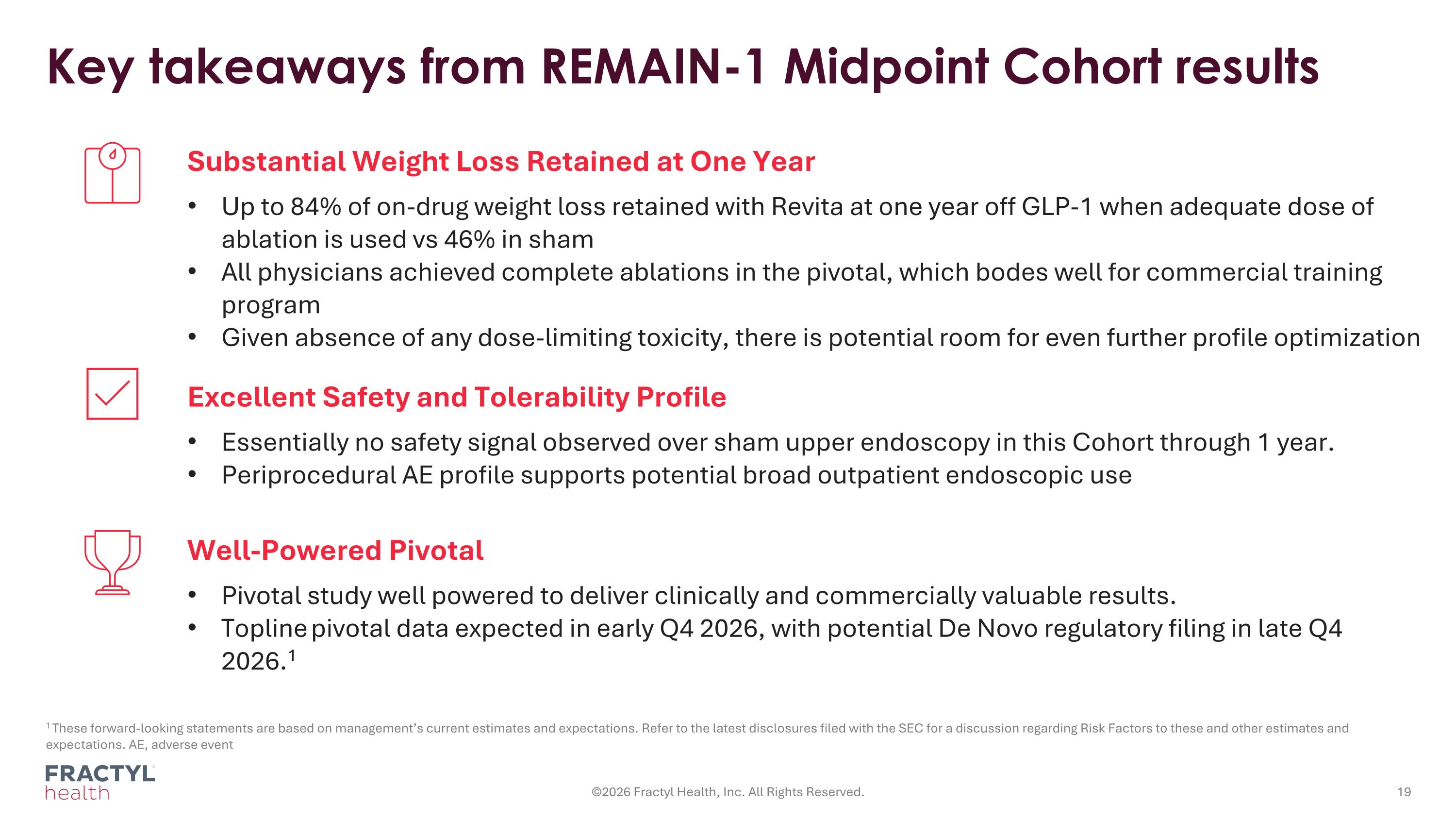
Key takeaways from REMAIN-1 Midpoint Cohort results ©2026 Fractyl Health, Inc. All Rights Reserved. Substantial Weight Loss Retained at One Year Up to 84% of on-drug weight loss retained with Revita at one year off GLP-1 when adequate dose of ablation is used vs 46% in sham All physicians achieved complete ablations in the pivotal, which bodes well for commercial training program Given absence of any dose-limiting toxicity, there is potential room for even further profile optimization Excellent Safety and Tolerability Profile Essentially no safety signal observed over sham upper endoscopy in this Cohort through 1 year. Periprocedural AE profile supports potential broad outpatient endoscopic use Well-Powered Pivotal Pivotal study well powered to deliver clinically and commercially valuable results. Topline pivotal data expected in early Q4 2026, with potential De Novo regulatory filing in late Q4 2026.1 1 These forward-looking statements are based on management’s current estimates and expectations. Refer to the latest disclosures filed with the SEC for a discussion regarding Risk Factors to these and other estimates and expectations. AE, adverse event
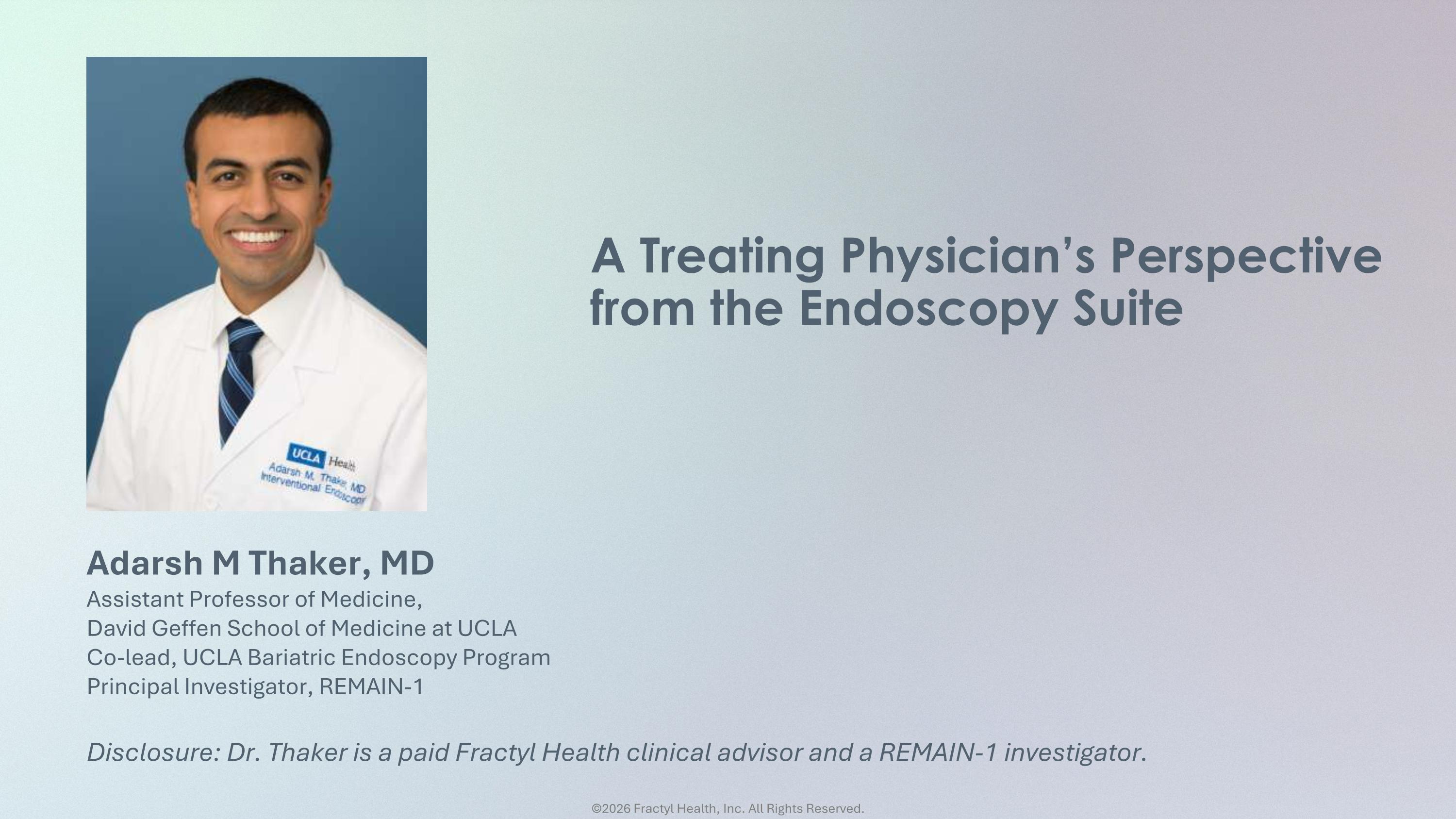
Adarsh M Thaker, MD Assistant Professor of Medicine, David Geffen School of Medicine at UCLA Co-lead, UCLA Bariatric Endoscopy Program Principal Investigator, REMAIN-1 A Treating Physician’s Perspective from the Endoscopy Suite ©2026 Fractyl Health, Inc. All Rights Reserved. Disclosure: Dr. Thaker is a paid Fractyl Health clinical advisor and a REMAIN-1 investigator.
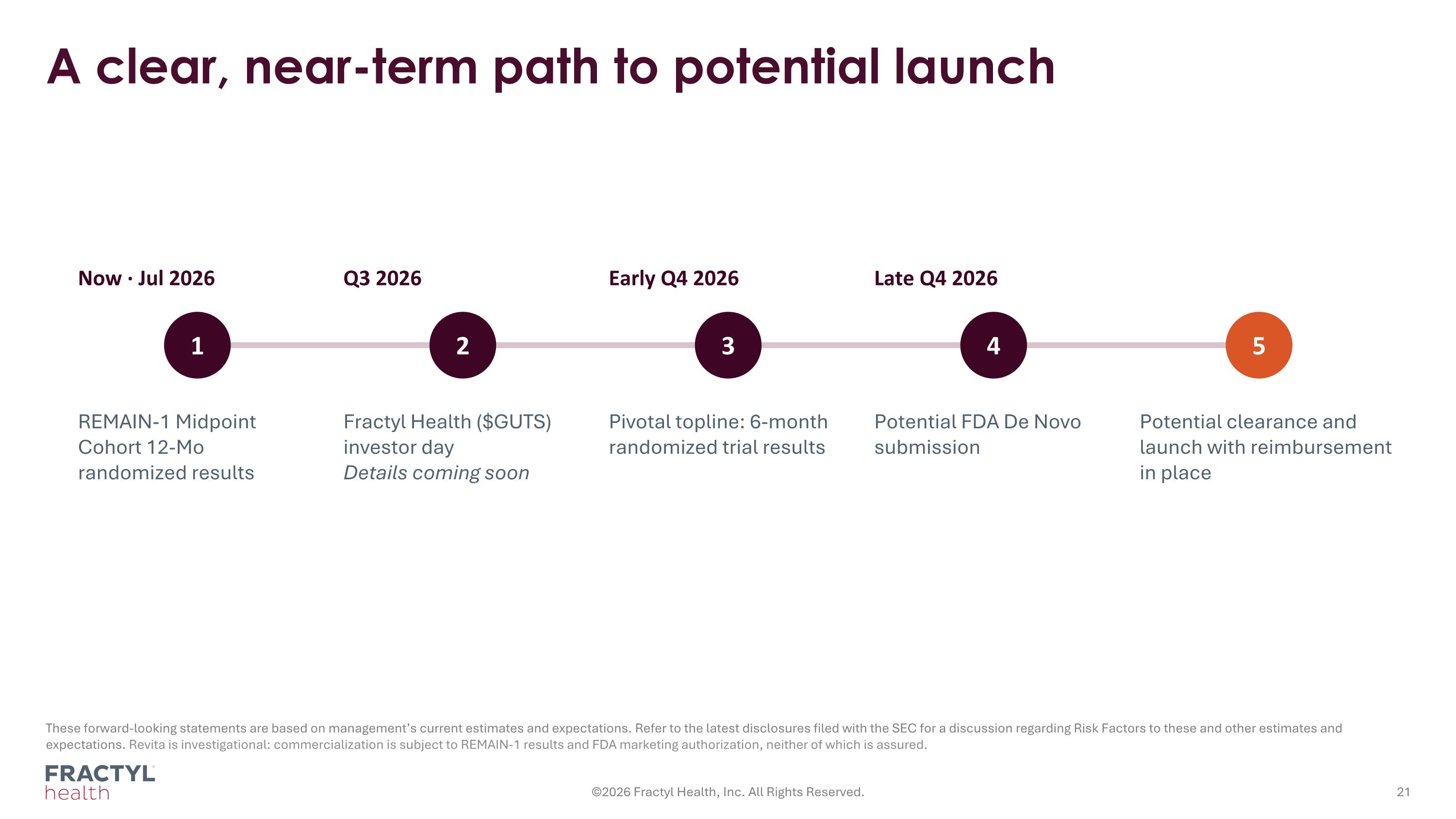
A clear, near-term path to potential launch ©2026 Fractyl Health, Inc. All Rights Reserved. These forward-looking statements are based on management’s current estimates and expectations. Refer to the latest disclosures filed with the SEC for a discussion regarding Risk Factors to these and other estimates and expectations. Revita is investigational: commercialization is subject to REMAIN-1 results and FDA marketing authorization, neither of which is assured. Now · Jul 2026 1 REMAIN-1 Midpoint Cohort 12-Mo randomized results Q3 2026 2 Fractyl Health ($GUTS) investor day Details coming soon Early Q4 2026 3 Pivotal topline: 6-month randomized trial results Late Q4 2026 4 Potential FDA De Novo submission 5 Potential clearance and launch with reimbursement in place

Appendix
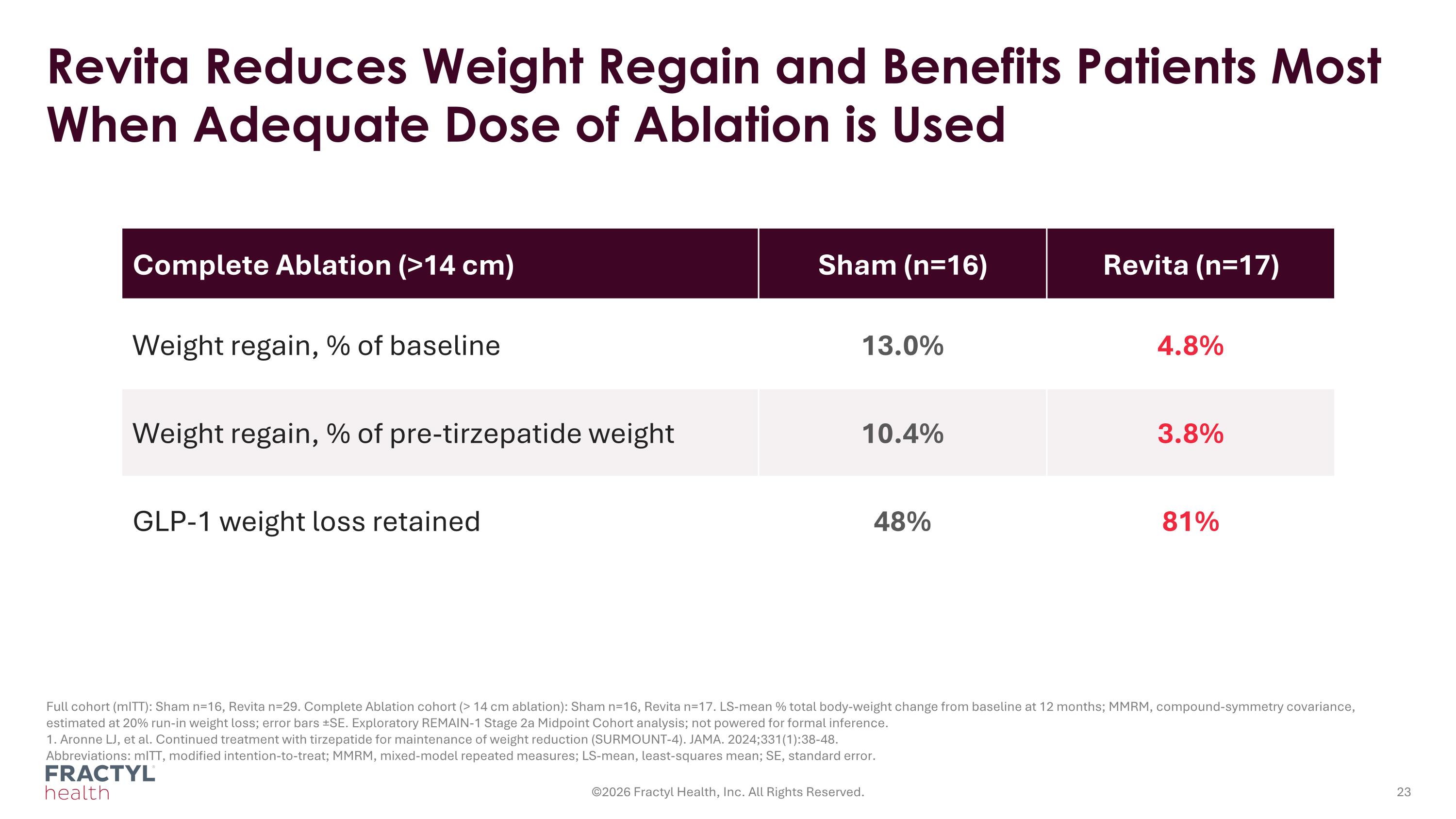
Revita Reduces Weight Regain and Benefits Patients Most When Adequate Dose of Ablation is Used Full cohort (mITT): Sham n=16, Revita n=29. Complete Ablation cohort (> 14 cm ablation): Sham n=16, Revita n=17. LS-mean % total body-weight change from baseline at 12 months; MMRM, compound-symmetry covariance, estimated at 20% run-in weight loss; error bars ±SE. Exploratory REMAIN-1 Stage 2a Midpoint Cohort analysis; not powered for formal inference. 1. Aronne LJ, et al. Continued treatment with tirzepatide for maintenance of weight reduction (SURMOUNT-4). JAMA. 2024;331(1):38-48. Abbreviations: mITT, modified intention-to-treat; MMRM, mixed-model repeated measures; LS-mean, least-squares mean; SE, standard error. ©2026 Fractyl Health, Inc. All Rights Reserved. Complete Ablation (>14 cm) Sham (n=16) Revita (n=17) Weight regain, % of baseline 13.0% 4.8% Weight regain, % of pre-tirzepatide weight 10.4% 3.8% GLP-1 weight loss retained 48% 81%
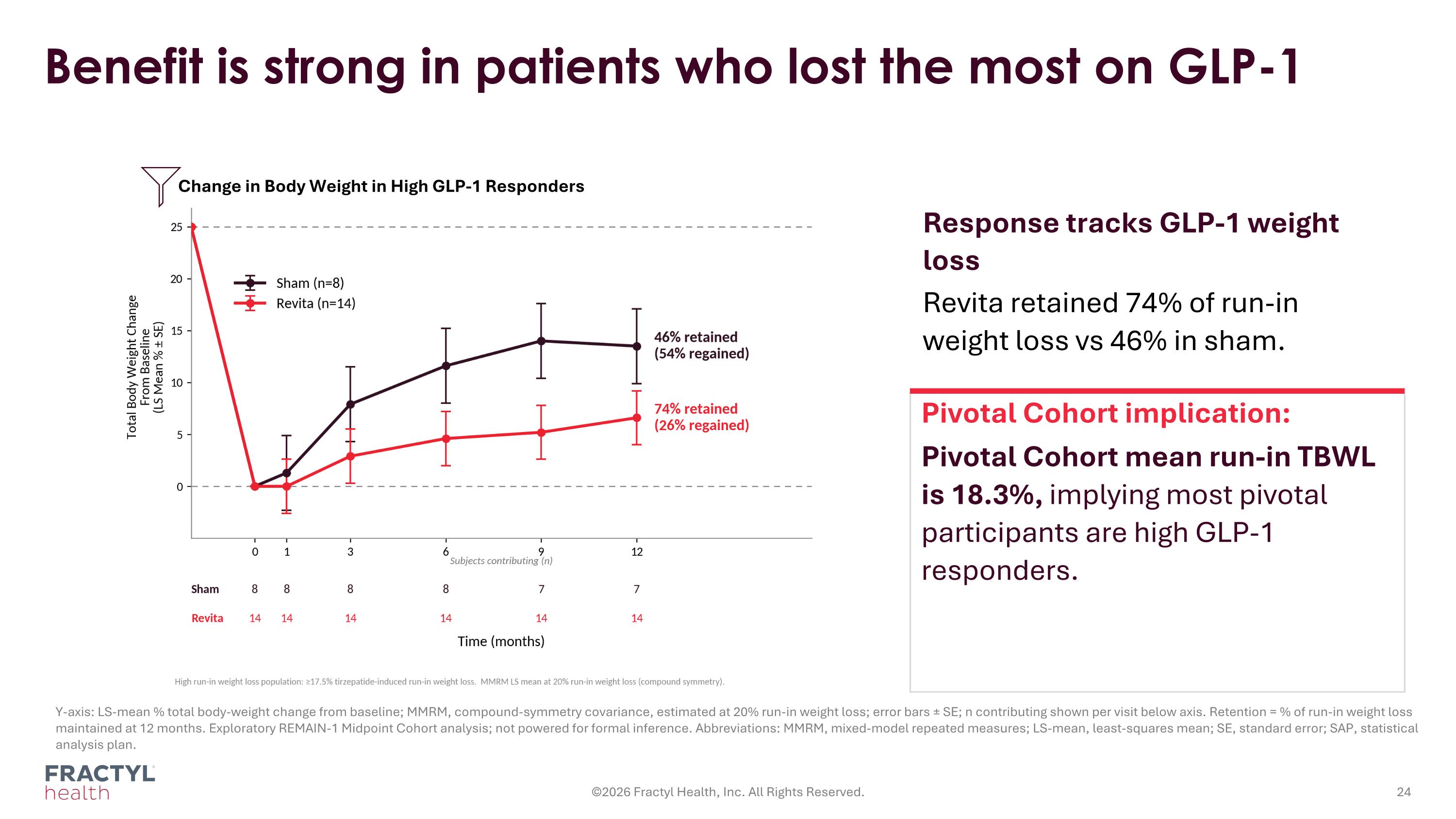
Y-axis: LS-mean % total body-weight change from baseline; MMRM, compound-symmetry covariance, estimated at 20% run-in weight loss; error bars ± SE; n contributing shown per visit below axis. Retention = % of run-in weight loss maintained at 12 months. Exploratory REMAIN-1 Midpoint Cohort analysis; not powered for formal inference. Abbreviations: MMRM, mixed-model repeated measures; LS-mean, least-squares mean; SE, standard error; SAP, statistical analysis plan. Benefit is strong in patients who lost the most on GLP-1 ©2026 Fractyl Health, Inc. All Rights Reserved. Change in Body Weight in High GLP-1 Responders Pivotal Cohort implication: Pivotal Cohort mean run-in TBWL is 18.3%, implying most pivotal participants are high GLP-1 responders. Response tracks GLP-1 weight loss Revita retained 74% of run-in weight loss vs 46% in sham.
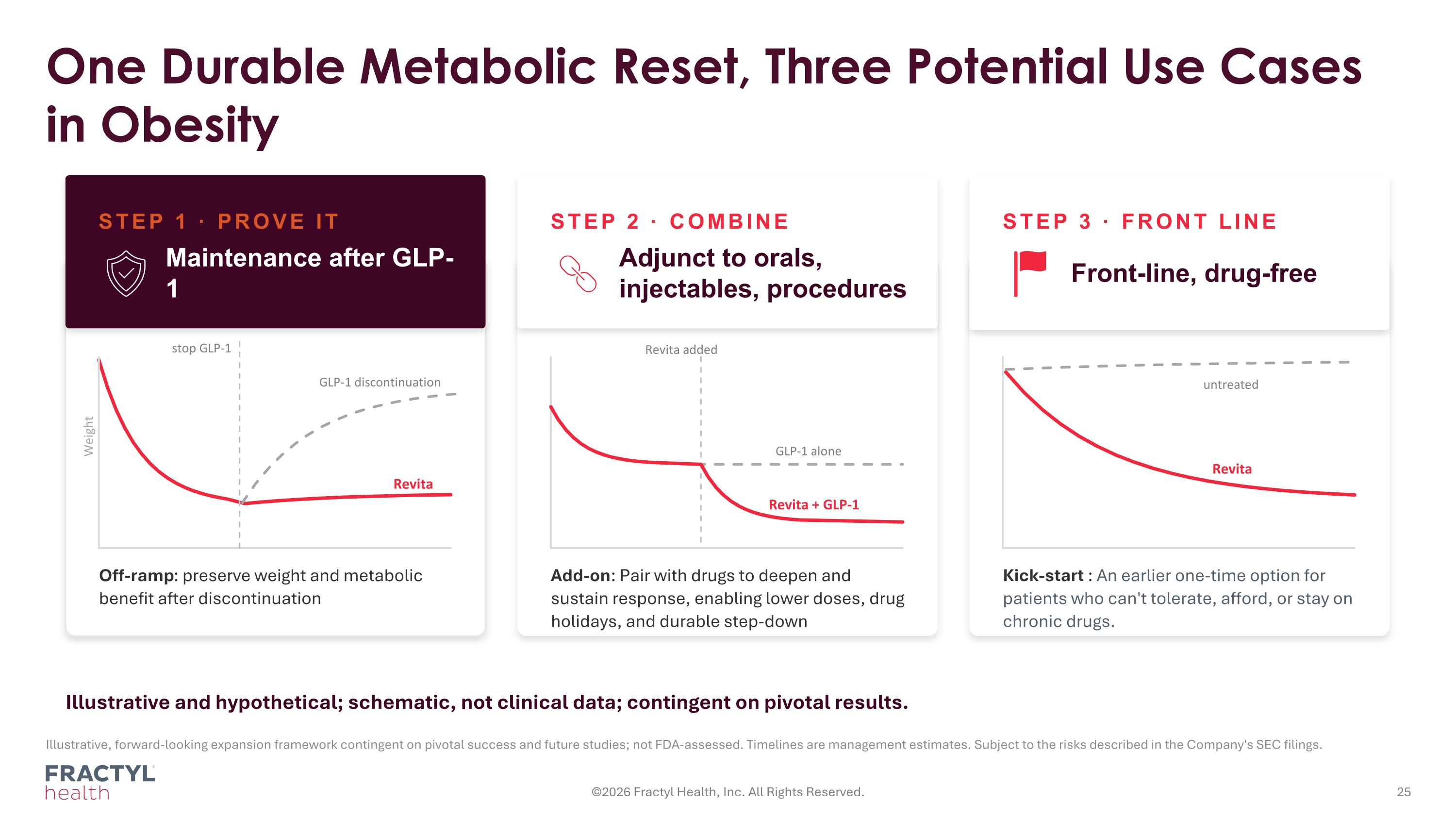
One Durable Metabolic Reset, Three Potential Use Cases in Obesity ©2026 Fractyl Health, Inc. All Rights Reserved. Illustrative, forward-looking expansion framework contingent on pivotal success and future studies; not FDA-assessed. Timelines are management estimates. Subject to the risks described in the Company's SEC filings. AFTER GLP-1 Off-ramp: preserve weight and metabolic benefit after discontinuation WITH GLP-1 Add-on: Pair with drugs to deepen and sustain response, enabling lower doses, drug holidays, and durable step-down FRONT-LINE Kick-start : An earlier one-time option for patients who can't tolerate, afford, or stay on chronic drugs. Illustrative and hypothetical; schematic, not clinical data; contingent on pivotal results. stop GLP-1 GLP-1 discontinuation Revita GLP-1 alone Revita + GLP-1 untreated Revita Weight Revita added STEP 1 · PROVE IT Maintenance after GLP-1 STEP 2 · COMBINE Adjunct to orals, injectables, procedures STEP 3 · FRONT LINE Front-line, drug-free
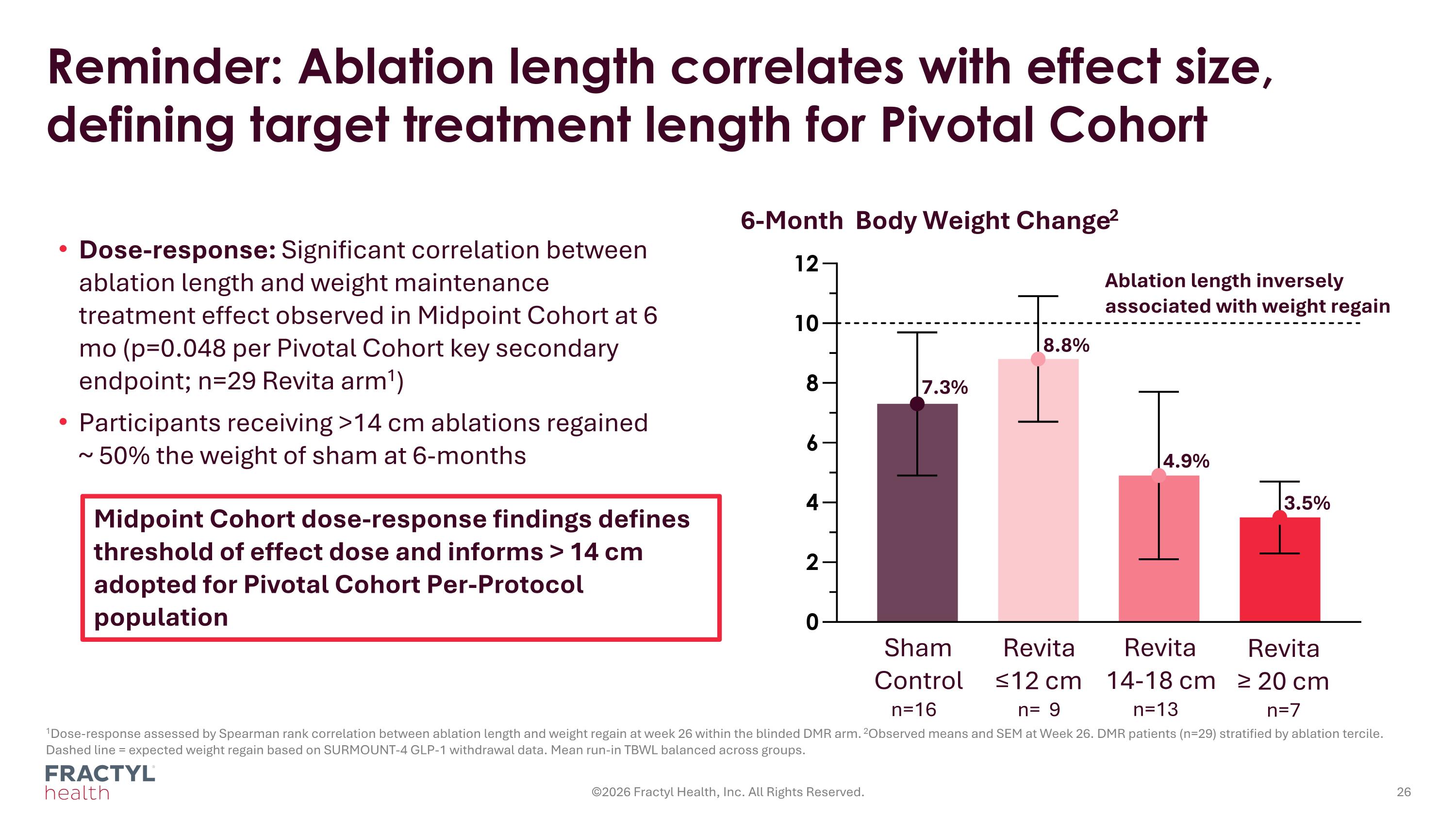
Reminder: Ablation length correlates with effect size, defining target treatment length for Pivotal Cohort ©2026 Fractyl Health, Inc. All Rights Reserved. Dose-response: Significant correlation between ablation length and weight maintenance treatment effect observed in Midpoint Cohort at 6 mo (p=0.048 per Pivotal Cohort key secondary endpoint; n=29 Revita arm1) Participants receiving >14 cm ablations regained ~ 50% the weight of sham at 6-months Revita ≤12 cm n= 9 Sham Control n=16 Revita 14-18 cm n=13 Revita ≥ 20 cm n=7 6-Month Body Weight Change2 Ablation length inversely associated with weight regain 7.3% 8.8% 4.9% 3.5% Midpoint Cohort dose-response findings defines threshold of effect dose and informs > 14 cm adopted for Pivotal Cohort Per-Protocol population 1Dose-response assessed by Spearman rank correlation between ablation length and weight regain at week 26 within the blinded DMR arm. 2Observed means and SEM at Week 26. DMR patients (n=29) stratified by ablation tercile. Dashed line = expected weight regain based on SURMOUNT-4 GLP-1 withdrawal data. Mean run-in TBWL balanced across groups.